
Clothing alterations are one of the most overlooked factors in how clothes actually work.
A well-tailored outfit can change how clothing looks on the body and how it feels to wear. It is the difference between garments that technically fit and garments that look intentional, polished, and considered.
Most people can recognize when an outfit looks effortless. What often goes unnoticed is that this ease is rarely accidental. Clothes that appear simple and well put-together usually share one thing in common: they fit correctly.
That remains true regardless of where you shop or how much you spend. Whether a piece comes from a higher-end retailer or a more affordable one, off-the-rack clothing is produced to fit standardized proportions.
Real bodies are not standardized.
Alterations are how that gap is addressed.
Tailoring allows clothing to align with your proportions instead of fighting against them. When fit improves, garments sit where they should, move more comfortably, and look more refined. Just as important, tailoring makes better use of what you already own, rather than requiring constant replacement.
Why Clothing Alterations Matter
Tailoring has long been treated as an expected part of dressing well, particularly in menswear. Even lower-priced men’s retailers routinely offer in-house alterations. Women, by contrast, are often expected to accept the fit as-is.
As fewer department stores and boutiques provide tailoring services, women are left to navigate fit issues on their own. The result is often a wardrobe full of pieces that are close, but not quite right.
Early in my career, I managed a boutique in Philadelphia that offered in-house tailoring. Seeing garments before and after even simple adjustments made one thing clear: fit and construction matter more than brand, trend, or price point. Small changes consistently transformed how clothing looked and how often it was worn.
When clothes fit properly, shopping becomes more selective, outfits feel finished without extra effort, and getting dressed requires less negotiation with your wardrobe.
The purpose of tailoring is functional fit, allowing you to adjust garments to your proportions and expand your options within your existing wardrobe.
Clothing Alterations Guide: Essential Tailoring Principles

1. Build an Alteration Budget
Plan to set aside roughly 10 percent of your total clothing budget for alterations.
Think in terms of total spend, not cost per item. Not everything needs tailoring, but the pieces that do are often the ones you wear most.
2. Know What Can (and Can’t) Be Altered
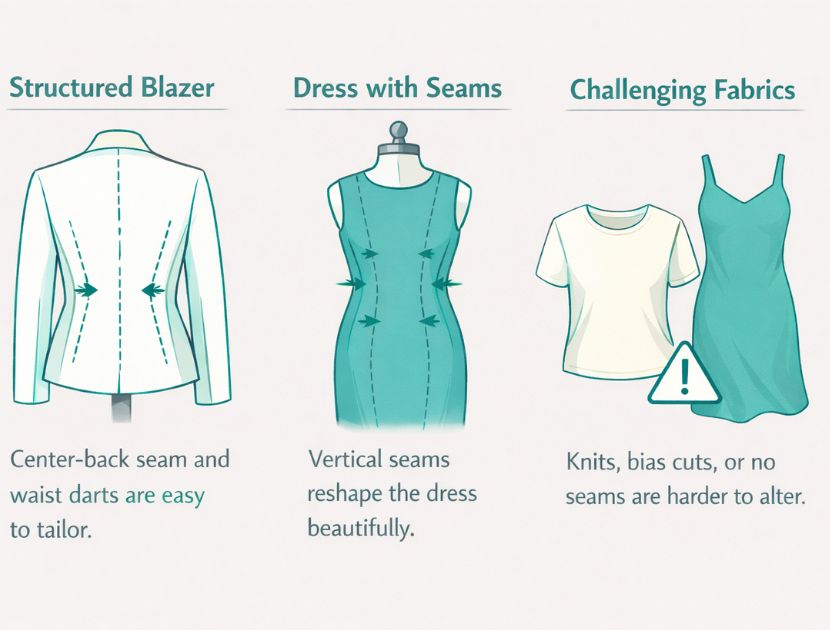
Garment construction matters.
Pieces with seams, darts, or center-back seams can usually be adjusted. Items without structure require more extensive reconstruction, which is not always worth the cost.
For example:
- Blazers with a center-back seam or waist darts are easy to take in.
- Dresses with vertical seams can often be reshaped beautifully.
- Knit tops, bias-cut dresses, or pieces without seams are harder and more expensive to alter.
Understanding this upfront saves frustration and money.
3. Always Size Up, Then Tailor Down
Fit your clothes to your largest body area, then alter the rest.
- Broad shoulders: fit the shoulders first, tailor the waist.
- Full bust: fit the bust, adjust the torso.
- Fuller hips or thighs: buy pants for your hips and tailor the waist.
This is one of the most important rules of tailoring, and it applies to every body type.
4. Listen to Your Tailor
A good tailor will tell you when an alteration makes sense and when it does not.
Some adjustments, like hemming or taking in a waistband, are straightforward and affordable. Others require extensive reconstruction and may not be worth the investment.
Trusting your tailor’s expertise will help you spend wisely and build a wardrobe that actually improves over time.
Common Clothing Alterations Worth Considering
Waistband Adjustments
One of the most common and useful alterations. If pants fit your hips but gap at the waist, tailoring the waistband creates a clean, comfortable fit without affecting the rest of the garment. This is especially useful for trousers, jeans, and skirts where sizing up for the hips is necessary.
Hemming
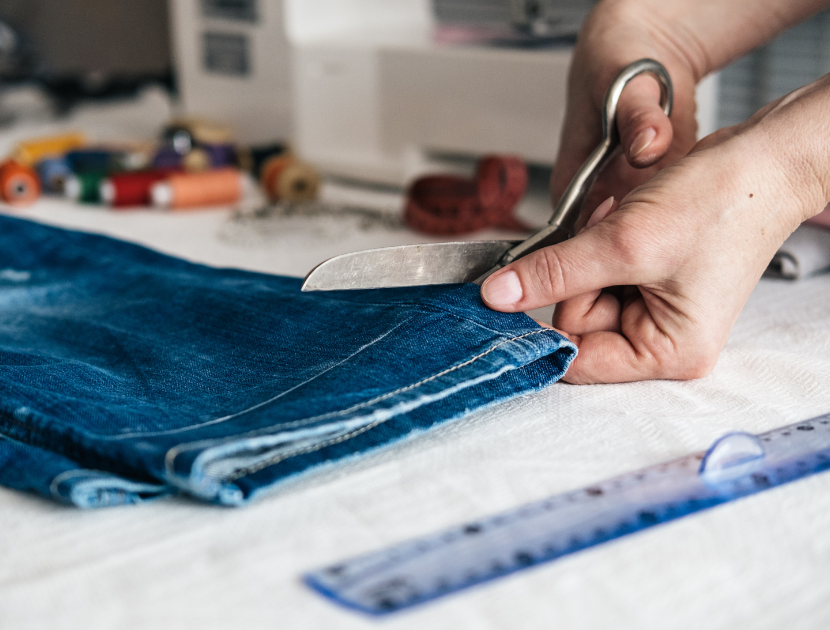
Hemming corrects length, which immediately improves proportions and polish.
- Pants should be hemmed based on the shoes you wear most often
- Many garments include extra fabric that allows length to be let out
- Sleeves generally look best ending at or just above the wrist bone
Shoulder Adjustments
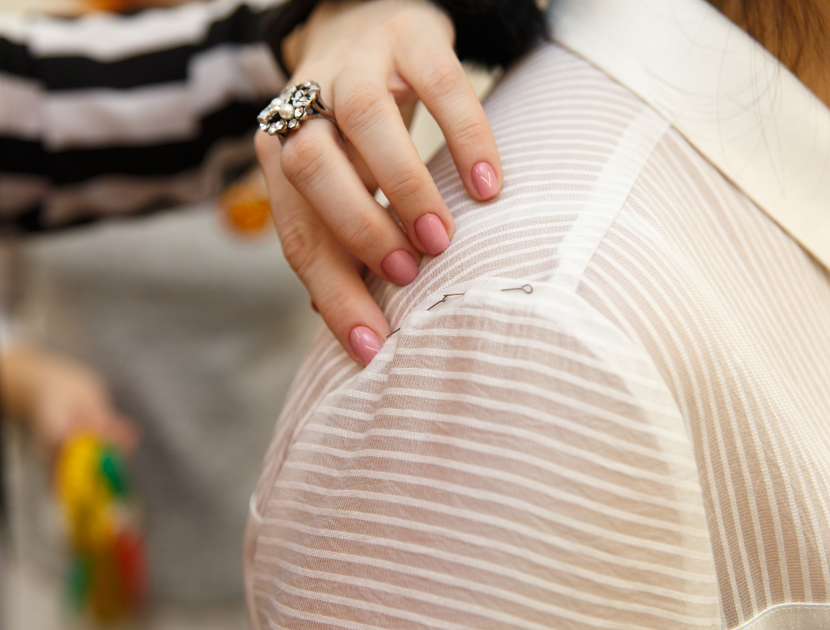
Narrowing shoulders refines the overall structure of jackets, blazers, and dresses.
- Most effective when shoulders feel too wide or extend past your natural line
- Improves how the entire garment hangs on the body
- More complex and best reserved for quality pieces
Back and Side Darts
Darts shape the waist while preserving fit through the shoulders and bust.
- Useful when garments fit well on top but feel boxy through the midsection
- Common in dresses, blazers, and structured tops
- Creates definition without needing to size down
Slimming the Legs of Pants
Slimming the leg adjusts volume while keeping the waist and hips intact.
- Ideal when pants feel too wide through the thigh or calf
- Tailoring typically starts at the hipbone and continues to the hem
- Maintains the original rise and waistband fit
Removing Belt Loops
Removing belt loops creates a cleaner waistband when a belt is never worn.
- Works best on tailored trousers and skirts
- Improves the look of tucked-in tops
- Not recommended if you rely on belts for fit
Pocket Removal
Removing pockets reduces bulk and creates a smoother line.
- Helpful when pockets show through fabric or add visual width
- Common on lightweight pants and skirts
- Does not affect overall garment structure
Most Common Alterations by Body Type
Most Common Alterations by Body Type
These are the alterations that most often improve fit for each body type. Use this as a starting point, not a rulebook.
| Body type | Common alterations | Why it helps | Guide |
|---|---|---|---|
| Triangle (Pear) |
|
Improves waist-to-hip fit and reduces visual bulk through the lower body. | Read guide |
| Inverted Triangle |
|
Softens upper-body width and creates better balance with the lower body. | Read guide |
| Rectangle |
|
Adds shape and polish without needing to size down. | Read guide |
| Round (Apple) |
|
Creates balance and comfort while maintaining clean lines. | Read guide |
| Hourglass |
|
Maintains proportion so garments fit the waist without pulling. | Read guide |
Is This Alteration Worth It?
Is This Alteration Worth It?
Use this chart to decide quickly. Costs are typical U.S. ranges and vary by location, fabric, and construction. When in doubt, ask your tailor before you commit.
| Alteration | Complexity | Typical cost | Worth it when | Skip it when |
|---|---|---|---|---|
| Hemming (pants) | Low | $10–25 |
|
|
| Hemming (sleeves) | Low–Med | $20–40 |
|
|
| Waistband adjustment | Medium | $20–45 |
|
|
| Taking in side seams (tops/dresses) | Medium | $25–60 |
|
|
| Adding or adjusting darts | Medium | $30–60 |
|
|
| Slimming pant legs | Medium | $30–75 |
|
|
| Shoulder narrowing | High | $60–120+ |
|
|
| Removing belt loops | Low | $10–25 |
|
|
| Pocket removal | Low–Med | $15–40 |
|
|
Tip: If a garment needs three or more major changes (shoulders, bust, waist, hips), it’s usually more cost-effective to keep shopping.
What Is Not Worth Tailoring
Not every garment deserves to be altered.
- Poor-quality fabric that will not hold its shape
- Pieces where multiple areas need major reconstruction
- Items where alteration costs exceed the value of the garment
- Trends you know you will not wear long-term
Learning when to walk away is just as important as knowing what to fix.
Where to Find a Good Tailor
The best tailors are usually found through referrals.
- Ask friends, coworkers, or neighbors
- Check local Facebook community groups
- Read Google and Yelp reviews
- Start with a simple alteration before committing expensive pieces
A great tailor becomes an essential part of your style ecosystem.
Frequently Asked Questions
Is tailoring worth the cost?
Yes. Tailoring improves fit, extends the life of your clothes, and makes outfits look more expensive.
What are the easiest alterations to start with?
Hemming, waistband adjustments, and taking in side seams are typically the simplest and most affordable.
Should I only buy clothes that fit perfectly off the rack?
No. Many of the best wardrobe pieces are chosen for quality and silhouette, then refined through tailoring.
How do I know if something can be altered?
Look for seams, darts, and structure. When in doubt, ask a tailor before committing.
Fit Is What Makes Clothes Work
Most garments fit almost right. Small adjustments are what make them sit correctly on your body, move comfortably, and look intentional instead of accidental. When fit improves, everything else follows: how outfits look, how often you wear them, and how easy it is to get dressed.
Clothing alterations are the single most crucial element in dressing well. A well-tailored outfit can completely transform how you look and feel, ensuring every piece fits your body flawlessly.
You Might Also Like


Want everything I recommend in one place?
Shop my trusted recommendations
ShopMy is where I save and organize the pieces I consistently recommend, including wardrobe staples, standout finds, and brands I have researched, worn, or genuinely trust. Everything here reflects my years of experience in personal style and the same thoughtful approach I use across The Well Dressed Life.
If you are looking for something specific, or want reliable options without the overwhelm, this is where I start.
Browse my ShopMy
Leave a Comment