
Understanding how to dress an hourglass body shape starts with proportion, not exaggeration.
When shoulders and hips are similar in width and the waist is clearly defined, clothing tends to show shape easily. The challenge is not creating curves, but supporting natural balance without distorting it.
Many standard garments are either too straight, which hides proportion, or overly clingy, which exaggerates it. Neither approach leads to consistently polished outfits.
This guide focuses on how clothing behaves on an hourglass frame so you can make wardrobe decisions that feel intentional, refined, and practical for real life.
This guide is part of a larger series on dressing by proportion and balance. If you are still determining your body shape or want a broader framework before diving into the details, start with How to Dress for Your Body Shape.
What Defines an Hourglass Body Shape
An hourglass body shape is defined by shoulders and hips that measure similarly, with a waist that is noticeably smaller than both.
This creates natural balance through the torso and a visible waist point even in relaxed clothing.
Because proportion is already present, small design choices can either support the silhouette or disrupt it quickly. The goal is continuity. Clothing should follow the body’s existing lines rather than compete with them.
Hourglass Body Shape Formula
Hourglass body shape
Use this when shoulders and hips are balanced with a clearly defined waist.
Measure waist, shoulders, and hips.
Divide waist by shoulders and hips.
Compare both results.
This works because a clearly defined waist measures noticeably smaller than both the shoulders and hips, creating natural balance through the torso.
Example
These formulas describe proportional relationships, not size. Many women sit close to the threshold or share traits with adjacent shapes.
Styling Focus for an Hourglass Frame
The styling priority for an hourglass body shape is preserving balance while allowing shape to read naturally.
This is achieved through:
Following the body’s existing lines
Supporting the waist without aggressive cinching
Avoiding excess volume that hides proportion
Choosing structure that skims rather than grips
The most common misstep for hourglass frames is choosing pieces that are either too loose to register shape or so tight they distort proportion.
Clothing should reinforce balance, not compete with it.
What you are trying to create
Definition
Allow the waist to exist naturally through seam placement, wrap, or shaping rather than tight compression.
Continuity
Maintain a smooth visual line from shoulder to hip without interruption.
Ease
Ensure garments allow movement and comfort without distorting proportion.
Hourglass Body Shape Shopping Guide
| Category | Look for | Why it works |
|---|---|---|
| Tops | Wrap styles, softly fitted knits, V necks, scoop necks, seamed blouses | Follows natural curves without clinging or flattening |
| Jackets | Single-button blazers, shaped jackets, belted or softly tailored layers | Supports the waist while keeping shoulders and hips balanced |
| Dresses | Wrap dresses, sheath dresses with shaping, bias-cut styles | Maintains proportion and highlights balance without exaggeration |
| Pants | High-rise or mid-rise, straight leg, subtle flare, tailored trousers | Anchors the silhouette and keeps lines clean through the hip |
| Skirts | Bias-cut, A-line, pencil with stretch, defined waistbands | Supports natural curves while allowing movement |
Tops That Work Well on an Hourglass Frame
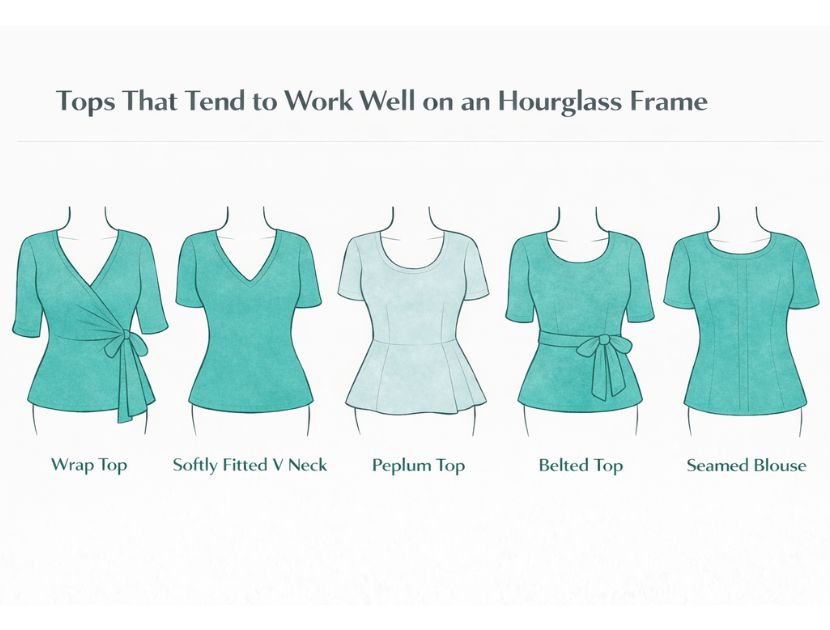
Tops should follow the body’s natural shape without pulling attention to any single point.
Styles that tend to work well:
- Wrap and faux-wrap silhouettes
- V neck and scoop necklines
- Softly fitted knits with structure
- Blouses with darts or seam shaping
- Waist-length or hip-length tops that maintain balance
Avoid boxy tops that obscure proportion and stiff crops that interrupt the waistline.
Jackets and Outerwear for Hourglass Shapes
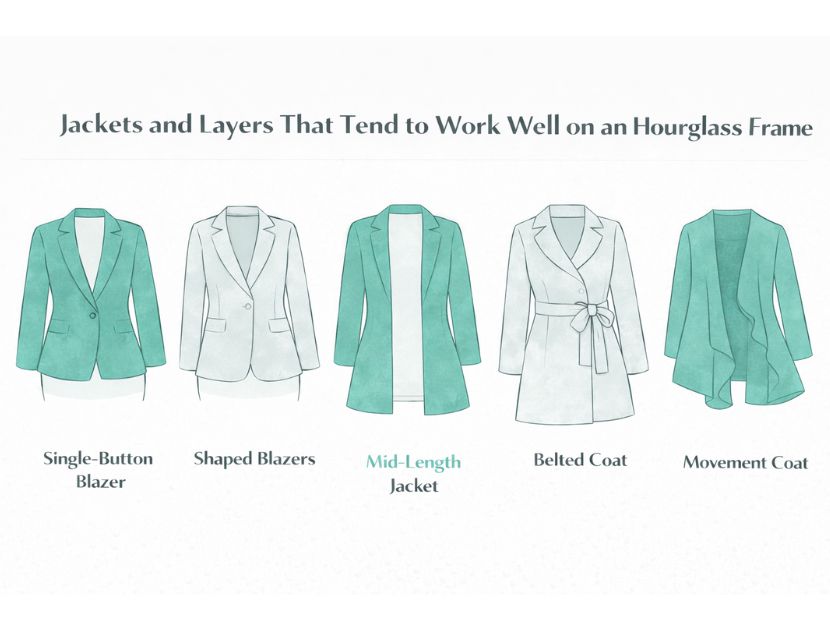
Outerwear should support balance rather than overpower it.
Effective jackets tend to maintain shape through the waist while allowing ease through the shoulders and hips.
Styles to prioritize:
- Single-button blazers
- Shaped blazers with subtle waist contour
- Belted coats with soft structure
- Mid-length jackets that follow the torso
- Fabrics with movement rather than rigidity
Avoid heavy padding or excessive volume that disrupts natural symmetry.
Pants That Complement an Hourglass Body Shape
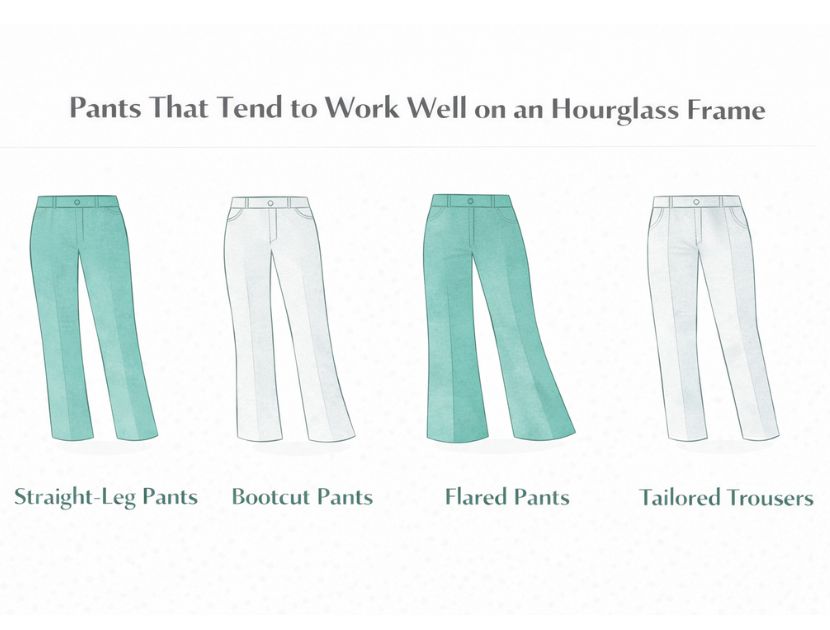
Pants should mirror the body’s balance rather than pulling attention upward or downward.
Styles that tend to work well:
- Straight-leg trousers
- Subtle flare or bootcut styles
- High-rise or mid-rise with clean lines
- Tailored pants with stretch
- Structured fabrics that skim rather than cling
Overly low-rise styles or extreme volume often throw off proportion.
Skirts That Support Natural Balance
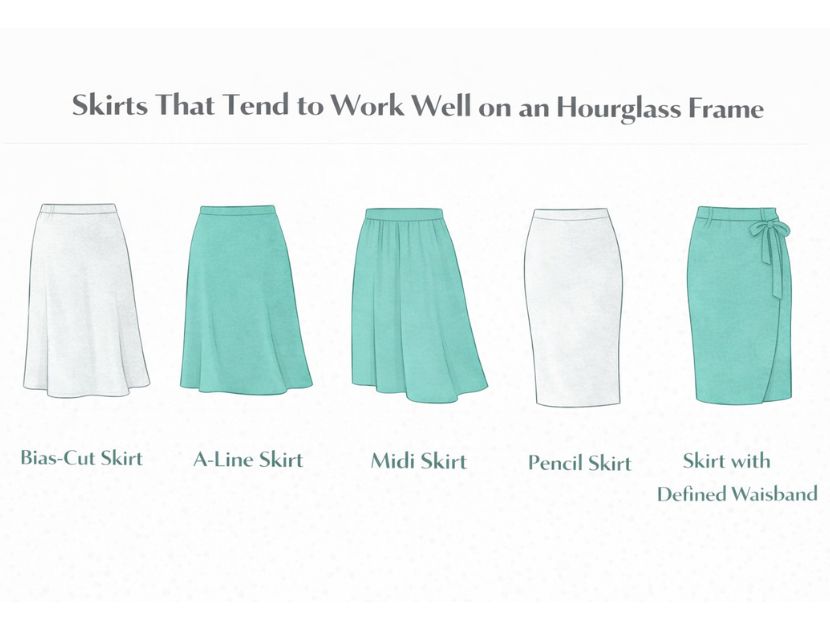
Skirts are most effective when they follow the hip line without restricting movement.
Styles that work well:
- Bias-cut skirts
- A-line silhouettes
- Pencil skirts with stretch
- Skirts with defined waistbands
- Midi lengths that allow flow
Rigid skirts without give often feel restrictive rather than polished.
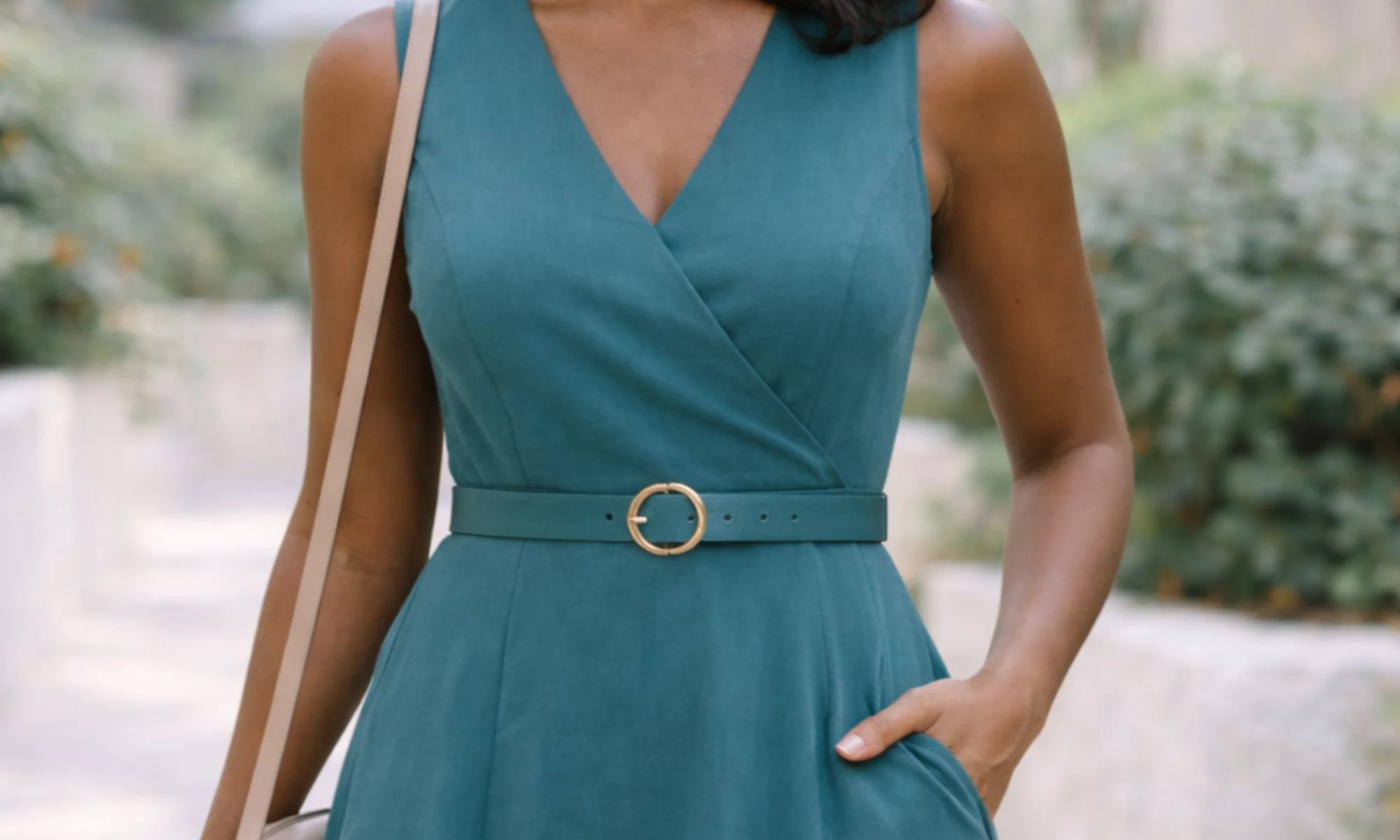
Dresses That Work With Hourglass Proportion
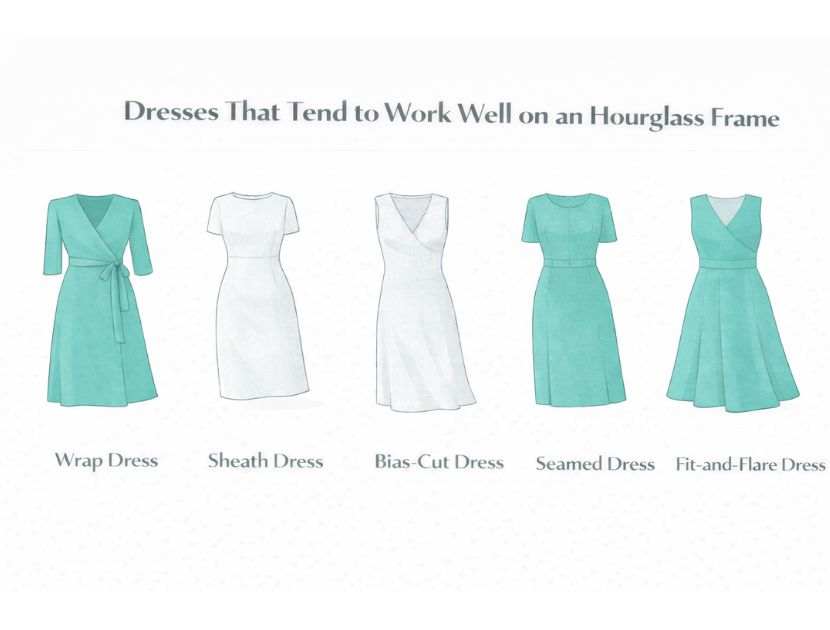
Dresses are strongest when they reinforce balance through cut rather than compression. Compression often creates distortion rather than polish.
Look for:
- Wrap dresses
- Sheath dresses with shaping
- Bias-cut dresses that skim
- Dresses with seam placement at the waist
- Styles that maintain contrast between bodice and skirt
The goal is continuity, not emphasis.
Alterations That Make the Biggest Difference for an Hourglass Frame
Because proportion is already present, tailoring should be subtle and strategic.
Waist Refinement
Light shaping through seams or darts often improves fit without restricting movement.
Jacket Closure and Button Placement
Single-button closures tend to work better than multi-button styles.
Hem and Sleeve Length
Precise lengths help preserve balance from top to bottom.
Avoid Over-Tailoring
Excessive cinching can distort proportion and reduce comfort.
What to Look For When Shopping
Hourglass frames tend to benefit from:
Seam placement that follows curves
Fabrics with stretch and structure
Balanced proportions from shoulder to hem
Designs that skim rather than grip
These cues help identify pieces that will work before trying them on.
Can You Be Between Body Types
Yes.
Many women share traits between hourglass and rectangle or pear shapes depending on weight distribution and garment cut.
Use the shape that best explains how clothes behave on your frame, not the one that sounds most flattering.
Universal Principles That Still Apply
Regardless of body shape:
Fit matters more than size
Fabric determines how clothing behaves
Tailoring refines proportion
Comfort supports confidence
Putting This Into Practice
Four combinations that work reliably
Waist definition + balance
Wrap or softly shaped top paired with straight-leg or subtle flare trousers.
Shaped layer + clean base
Single-button or shaped blazer over a streamlined top and tailored pants.
Skimming dress + ease
Bias-cut, sheath, or fit-and-flare dress that follows natural curves without compression.
Defined waist + flow
Seamed or belted top with a midi skirt that allows movement while maintaining proportion.
Dressing an hourglass body shape is about restraint, not enhancement.
When clothing follows existing proportion, outfits feel complete without effort.
Use this guide as a reference point, then adapt it as your lifestyle and preferences evolve.
If You’re an Hourglass, You Might Also Be…
An hourglass body type is defined by balance between the shoulders and hips with a visible waist. Even within that balance, many women share traits with a secondary body type that affects fit and proportion.
Hourglass + Round
Balanced curves with a softer midsection.
Learn how to dress an Hourglass + Round shape →Hourglass + Triangle
Balanced shoulders with fuller hips.
Learn how to dress an Hourglass + Triangle shape →Hourglass + Inverted Triangle
Balanced hips with slightly broader shoulders.
Learn how to dress an Hourglass + Inverted Triangle shape →Start with your natural balance, then adjust for your secondary shape based on where clothes pull, cling, or feel inconsistent from outfit to outfit.
You Might Also Like



Want everything I recommend in one place?
Shop my trusted recommendations
ShopMy is where I save and organize the pieces I consistently recommend, including wardrobe staples, standout finds, and brands I have researched, worn, or genuinely trust. Everything here reflects my years of experience in personal style and the same thoughtful approach I use across The Well Dressed Life.
If you are looking for something specific, or want reliable options without the overwhelm, this is where I start.
Browse my ShopMy
Leave a Comment