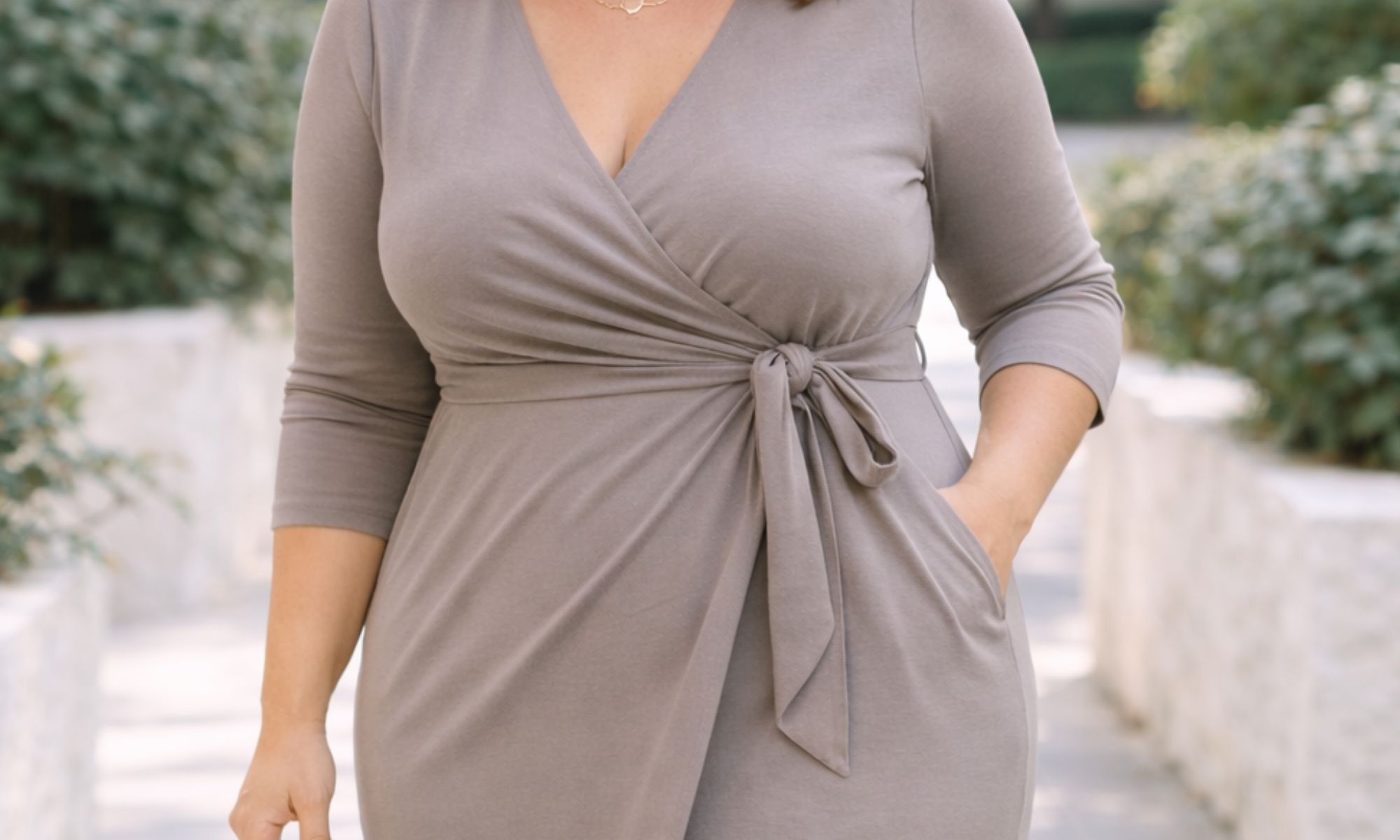
How to Dress an Inverted Triangle Body Type

Understanding how to dress an inverted triangle body shape starts with proportion and visual balance, not minimizing or hiding the upper body.
When shoulders or bust carry more visual weight than the hips, clothing naturally pulls the eye upward. The challenge is not reducing the upper body, but creating balance through the lower half so the silhouette feels intentional and supported.
Many standard garments feel restrictive across the shoulders, add bulk through the chest, or visually dominate the upper torso. At the same time, overly minimal bottoms can leave the frame feeling top heavy and unfinished.
This guide focuses on how clothing behaves on an inverted triangle frame so you can make wardrobe decisions that feel refined, balanced, and practical for real life.
This guide is part of a larger series on dressing by proportion and balance. If you are still determining your body shape or want a broader framework before diving into the details, start with How to Dress for Your Body Shape.
What Defines an Inverted Triangle Body Shape
An inverted triangle body shape is defined by shoulders or bust that measure wider than the hips, with less visual weight through the lower body.
Visual weight is concentrated through the upper torso, often in the shoulders, chest, or back, while the hips and thighs appear narrower in comparison.
Because proportion is uneven from top to bottom, small design choices can significantly affect balance. The goal is not to hide the upper body, but to strengthen the lower half of the silhouette so the body reads cohesive and grounded.
Clothing should redistribute visual weight, not fight it.
Inverted Triangle Body Shape Formula
Inverted triangle body shape
Use this when shoulders or bust carry more visual weight than the hips.
Measure shoulders or bust and hips.
Divide shoulders or bust by hips.
Compare your result to the threshold.
Example
These formulas describe proportional relationships, not size. Many women sit near the threshold or share traits with adjacent shapes.
Styling Focus for an Inverted Triangle Frame
The styling priority for an inverted triangle body shape is restoring balance between the upper and lower body.
This is achieved through:
Adding presence, movement, or volume below the waist
Keeping the upper body clean, open, and comfortable
Avoiding excess structure or detail at the shoulders
Choosing fabrics that skim rather than stiffen
The most common misstep for inverted triangle frames is focusing exclusively on softening the top instead of strengthening the bottom.
Clothing should rebalance proportion, not apologize for it.
What you are trying to create
Balance
Redistribute visual weight so the lower body supports the upper body and the silhouette feels grounded.
Ease
Keep the upper body clean, open, and comfortable so clothing moves through the shoulders and chest without restriction.
Continuity
Create a smooth transition from top to bottom so the eye moves through the outfit instead of stopping at the shoulders.
Inverted Triangle Body Shape Shopping Guide
| Category | Look for | Why it works |
|---|---|---|
| Tops | V or scoop necklines, wrap styles, softer fabrics, minimal shoulder detail, tops that allow ease through the chest | Opens the neckline and reduces visual dominance through the shoulders and upper torso |
| Jackets | Open-front or draped jackets, longer lengths, minimal shoulder padding, single-button closures | Softens the upper body without adding bulk at the shoulders, creating a longer line through the torso |
| Dresses | A-line dresses, fit-and-flare styles, wrap dresses with ease, seam placement that supports the skirt | Creates continuity by balancing the upper body while allowing the skirt to add movement and presence |
| Pants | Straight-leg or wide-leg styles with drape, mid to high rise, clean waistbands | Adds visual weight through the lower body so the silhouette feels balanced and supported |
| Skirts | A-line skirts, bias-cut styles, fluid midis, skirts with clean waistbands | Maintains a smooth transition from waist to hem while adding movement and balance through the lower half |
Tops That Work Well on an Inverted Triangle Frame
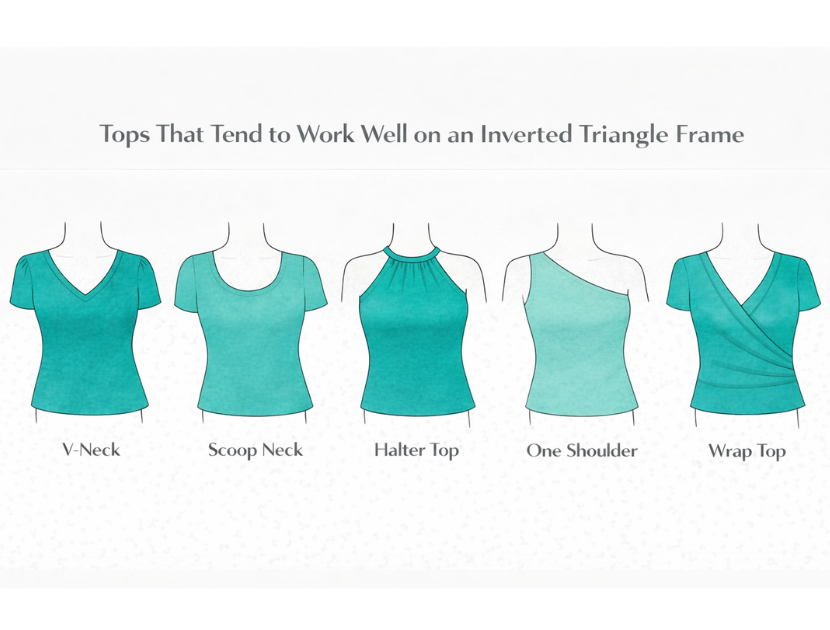
Tops should support comfort and reduce emphasis at the shoulders.
This is where balance begins by allowing the upper body to feel open rather than constrained.
Styles that tend to work well include:
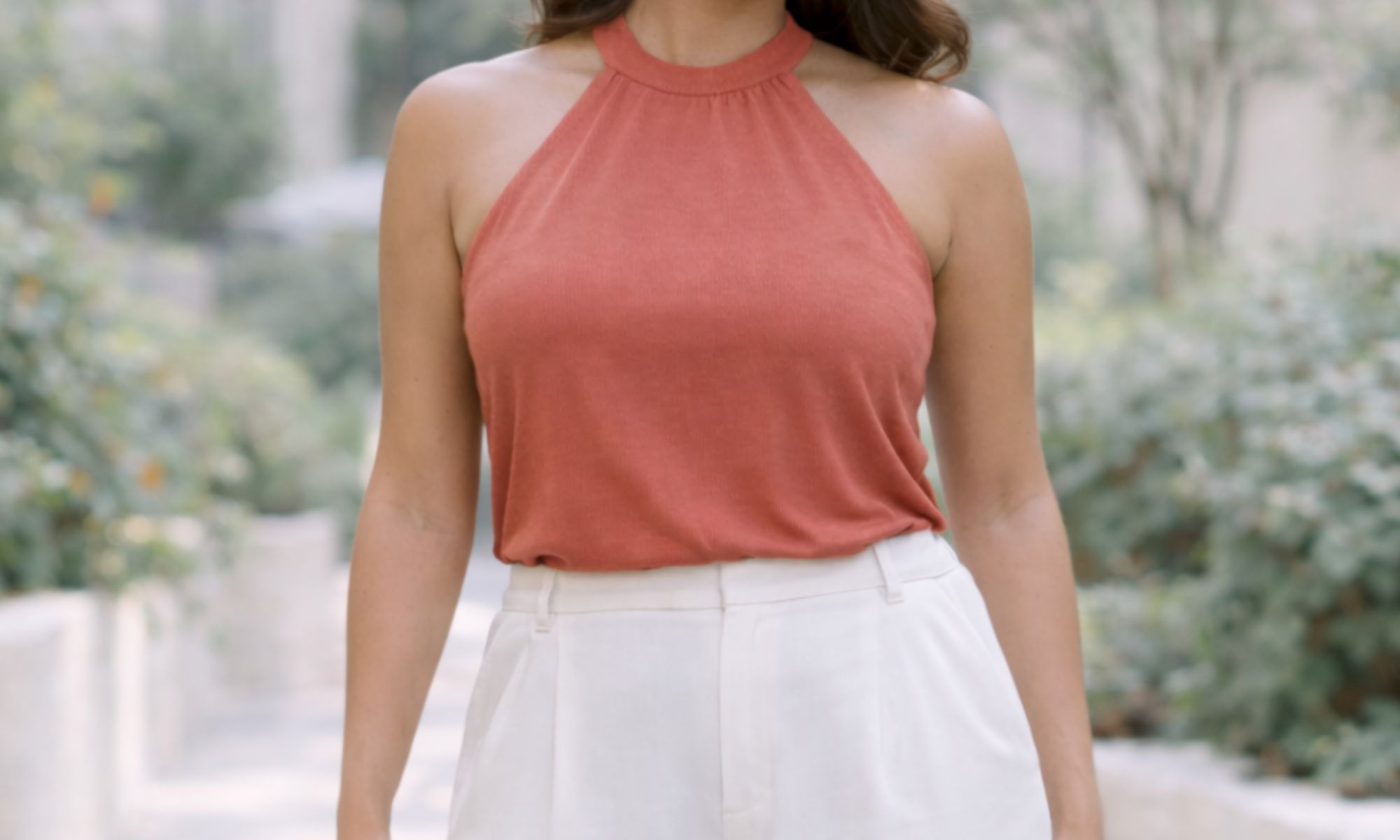
- V necks, scoop necks, and wrap styles
- Soft knits or woven fabrics with drape
- Minimal shoulder detailing
- Relaxed shoulder seams or raglan sleeves
Avoid boat necks, high crew necks, and heavy shoulder embellishment unless balanced with a strong bottom.
Jackets and Outerwear for Inverted Triangle Shapes
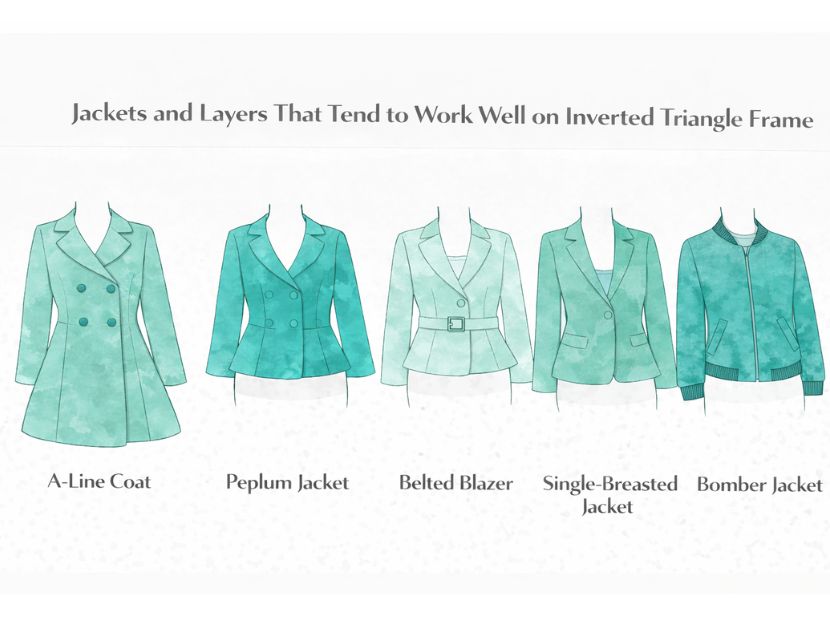
Outerwear should guide the eye downward.
Effective jackets soften the upper body and add length through the torso.
Styles to prioritize include open front blazers and cardigans, draped or waterfall jackets, longer line blazers with light structure, and coats with movement rather than stiffness.
Avoid cropped jackets or strong shoulder padding unless paired with substantial bottoms.
Pants That Complement an Inverted Triangle Body Shape
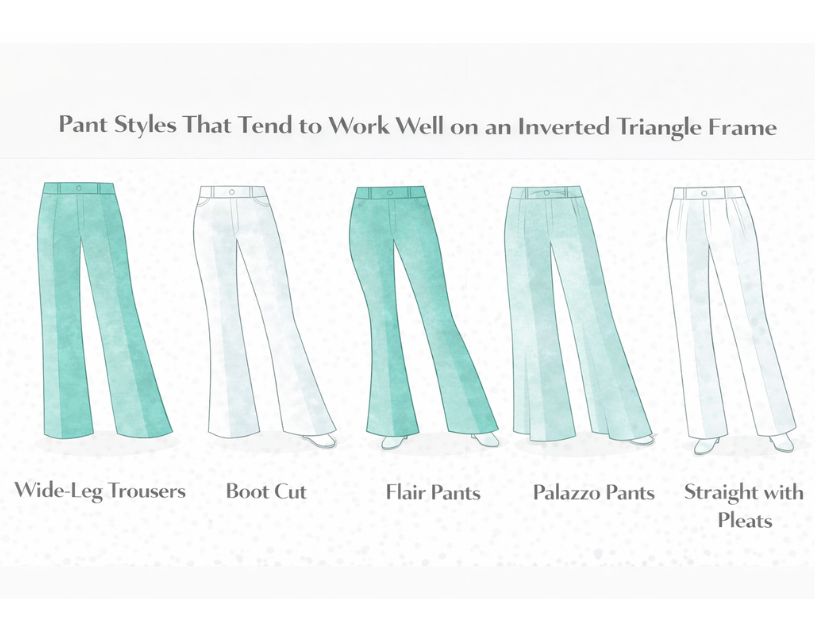
Pants are essential for restoring balance.
The lower body should carry enough visual weight to support the upper torso.
Styles that tend to work well include wide leg trousers, straight leg pants with structure, pleated styles, and textured or heavier fabrics.
Avoid overly slim or clingy styles that exaggerate top heavy proportion.
Skirts That Balance the Lower Body
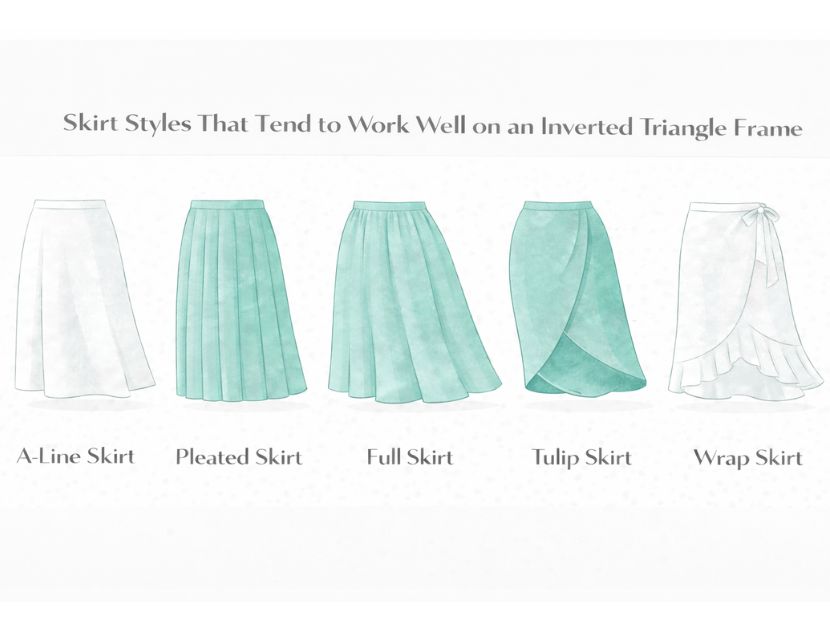
Skirts naturally add movement and presence.
Styles that work well include A line skirts, bias cut skirts, fluid midis, and skirts that release gently from the waist.
Very narrow pencil skirts can work, but they usually need an open neckline on top to feel balanced.
Dresses That Work With Inverted Triangle Proportion
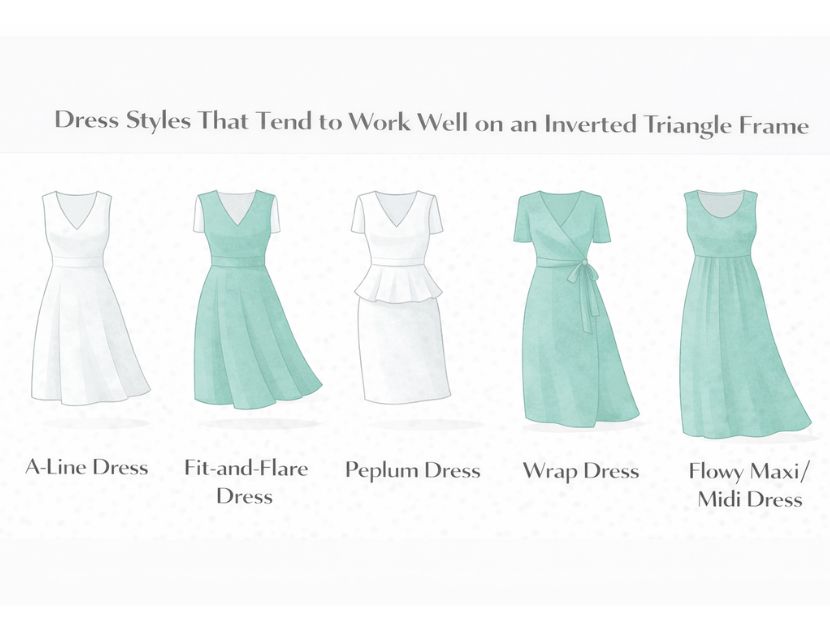
Dresses are strongest when they introduce ease above the waist and movement below it.
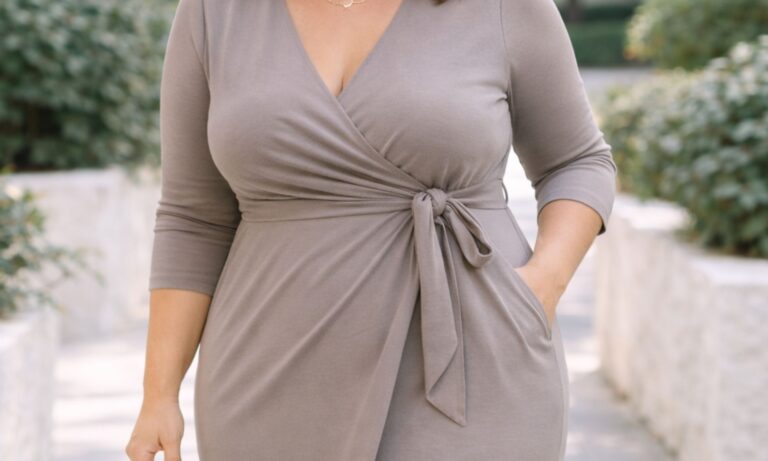
Look for fit and flare dresses, A line silhouettes, wrap dresses with relaxed shoulders, and dresses with seam placement that supports the skirt.
The goal is balance and flow, not compression.
Alterations That Make the Biggest Difference for an Inverted Triangle Frame
Strategic tailoring can significantly improve comfort and balance.
Shoulder and armhole adjustments
Relieving tightness here often transforms how a garment feels.
Hem and length adjustments
Adding length or movement below the waist shifts proportion effectively.
Avoid over tailoring the top
Too much structure through the shoulders can exaggerate imbalance.
What to Look For When Shopping
Inverted triangle frames tend to benefit from:
Visual weight below the waist
Open necklines and soft upper fabrics
Movement and texture in bottoms
Structure placed intentionally, not aggressively
These cues help identify pieces that will work before trying them on.
Can You Be Between Body Types
Yes.
Many women share traits between inverted triangle and rectangle or hourglass shapes depending on weight distribution and garment cut.
Use the shape that best explains how clothes behave on your frame, not the one that sounds most flattering.
Universal Principles That Still Apply
Regardless of body shape:
Fit matters more than size
Fabric determines how clothing behaves
Tailoring refines proportion
Comfort supports confidence
Putting This Into Practice
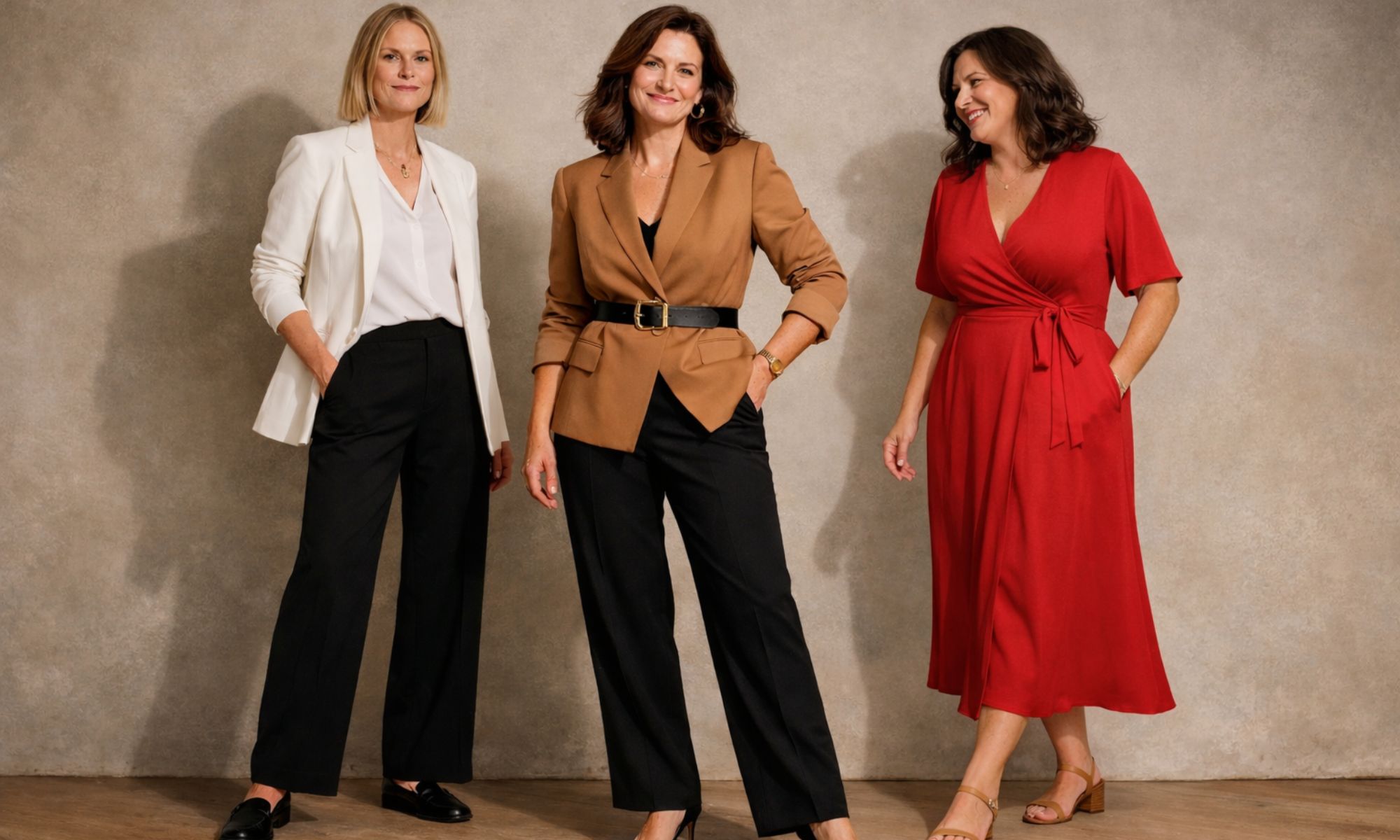
Four combinations that work reliably
Soft top + structured bottom
V-neck or wrap knit paired with wide-leg or straight-leg trousers that add presence below the waist.
Open layer + clean base
Draped or open-front jacket over a simple top with straight-leg or fluid pants.
Defined top + movement
Wrap or softly shaped top paired with an A-line or bias-cut skirt that adds flow through the lower half.
Balanced dress + ease
Fit-and-flare or A-line dress with an open neckline, styled simply to let proportion do the work.
Dressing an inverted triangle body shape is about balance, not restraint.
When the upper body is allowed to move freely and the lower body carries visual presence, outfits feel polished without effort.
Use this guide as a reference point, then adapt it as your lifestyle, body, and preferences evolve.
If You’re an Inverted Triangle, You Might Also Be…
An inverted triangle body type is defined by broader shoulders or a fuller upper body relative to the hips. While upper-body strength is the dominant feature, many women share traits with a secondary shape that influences balance and fit.
Inverted Triangle + Rectangle
Broader shoulders with a straighter torso.
Learn how to dress an Inverted Triangle + Rectangle shape →Inverted Triangle + Hourglass
Broader shoulders balanced by curves through the hips.
Learn how to dress an Inverted Triangle + Hourglass shape →Inverted Triangle + Round
Upper-body fullness with added softness through the midsection.
Learn how to dress an Inverted Triangle + Round shape →Start with your shoulder-to-hip balance, then layer in your secondary shape to address where volume, structure, or softness shows up most in real outfits.
You Might Also Like

Want everything I recommend in one place?
Shop my trusted recommendations
ShopMy is where I save and organize the pieces I consistently recommend, including wardrobe staples, standout finds, and brands I have researched, worn, or genuinely trust. Everything here reflects my years of experience in personal style and the same thoughtful approach I use across The Well Dressed Life.
If you are looking for something specific, or want reliable options without the overwhelm, this is where I start.
Browse my ShopMy