

How to Shop Online for Clothes Without Wasting Money (2026 Guide)

Online shopping for clothes should make life easier. For many women, it does the opposite.
Between inconsistent sizing, overwhelming choices, aggressive social selling, and increasingly strict return policies, it is easy to feel like you are constantly sending things back or settling for pieces that never quite work.
After more than a decade as a personal stylist and years of guiding women through online shopping through The Well Dressed Life, I see the same problems again and again. The issue is rarely taste. It is almost always strategy.
This updated 2026 guide walks you through how to shop for clothes online with more confidence, fewer returns, and far better results.
Start Here: What Usually Goes Wrong With Online Shopping
If online shopping feels frustrating, it usually comes down to one of three things:
- Shopping without clarity about what actually works for you
- Buying pieces without a plan for how they fit into your wardrobe
- Shopping too fast, especially on social platforms
You do not need more options. You need a system.
If you want help getting clear before you shop, start here: How to Build a Capsule Wardrobe That Actually Works
If you want trusted places to shop once you’re ready: Best Clothing Brands for Women Over 40 – updated regularly
Most wasted online purchases start before anything is added to cart. They happen when you shop without a clear plan for what you actually need.
The Wardrobe Checklist helps you slow down, identify real gaps in your wardrobe, and shop with intention so you buy less, choose better, and keep more of what you order.
FREE DOWNLOAD
Get the Wardrobe Essentials Checklist
A simple wardrobe inventory to help you see what you own, spot the gaps, and shop with a plan. I’ll email it to you when you subscribe.
The Current State of Retail in 2026
Retail has been shifting online for years, but the experience has changed significantly.
Physical stores carry less inventory. Many brands release new products weekly. Social platforms now act as storefronts. Returns are no longer universally easy or free.
While foot traffic is gaining momentum again, especially at higher-end destination malls and lifestyle centers, the in-store assortment for midlife women remains limited. Stores may look busy, but racks are often narrow, size runs are incomplete, and styles tend to skew either very young or overly conservative. The middle ground many women actually need is still underrepresented.
At the same time, specialty sizing has largely disappeared from store floors. Petite, tall, and extended sizes are increasingly offered online-only, even at retailers with a physical presence. This shift reduces in-store try-on opportunities and makes online shopping less optional and more necessary for many women.
Online shopping still offers real advantages. You can compare options quickly, access a broader range of sizes, and try clothes on in your own space without pressure. The difference between a productive experience and a frustrating one is not access. It is having a framework before you start.
Step One: Get Clear on Your Personal Style
The fastest way to waste money online is shopping without clarity.
Before you open a browser or app, define what actually works for you.
Practical ways to do this:
- Save outfit images that reflect how you want to dress in real life
- Notice repeated silhouettes, colors, and proportions
- Be honest about what you actually wear week to week
Before adding anything to cart, ask yourself one simple question:
Does this look like it belongs in my existing wardrobe and my real life?
If the answer is unclear, skip it.
If this step feels hard, that is often the real reason online shopping feels frustrating. When you are unclear on your personal style, every purchase becomes a guess, and even good pieces can feel wrong once they arrive.
Spending time defining what you like, what you actually wear, and what fits your real life makes every future shopping decision easier and far less expensive. Our guide to How to Define Your Personal Style walks you through that process step by step.
Step Two: Know Your Measurements, Not Just Your Size
Sizing is inconsistent across brands and countries. Your usual size is only a starting point.
Take and save the following measurements:
- Bust
- Waist
- Hips
- Inseam
Store them in your phone so they are always available when shopping. This one habit dramatically improves online fit success.
Quick Reference: What to Measure and Why
| Measurement | Why It Matters |
|---|---|
| Bust | Determines fit through the chest and shoulders |
| Waist | Critical for dresses, trousers, and tailoring |
| Hips | Affects drape and comfort in skirts and pants |
| Inseam | Prevents hemming surprises and awkward lengths |
Step Three: Always Check the Brand’s Size Guide
Every retailer fits differently.
A 38-inch bust may be a Medium in one brand and a Large in another. A size 10 can vary significantly depending on target customer, fabric, and cut.
Treat each brand as its own sizing system until proven otherwise. Always compare your measurements to the brand’s chart, even if you think you know your size.
Step Four: Read Reviews With Intention
Reviews are useful when you know what to filter for.
Focus on:
- Fit notes such as runs small, boxy, or long
- Fabric feedback including weight, stretch, and sheerness
- Photos from customers with similar body types
Skip reviews centered on shipping complaints or personal style preferences. Look for patterns, not individual opinions.
Step Five: Understand Return Policies Before Checkout
Return policies matter more than ever in 2026.
Many retailers now:
- Charge restocking fees
- Offer store credit instead of refunds
- Require short return windows
- Deduct shipping from refunds
Before buying, confirm:
- How long you have to return
- Whether refunds go back to your original payment method
- Who pays return shipping
It is also worth acknowledging that return policies are often stricter at smaller or independently owned brands.
Supporting brands that prioritize ethical production, fair wages, limited inventory runs, or domestic manufacturing often means accepting shorter return windows or less flexible processes. These businesses simply do not operate at the scale required to absorb unlimited free returns.
Amazon fundamentally reshaped consumer expectations around speed, convenience, and returns. But those expectations are not realistic for most brands and they come with real trade-offs. We cannot demand low prices, ethical practices, small-batch production, and frictionless returns all at once.
Shopping with intention means understanding what you are supporting and adjusting expectations accordingly.
Retailers With Relatively Easier Online Returns and Clear Policies
| Retailer | Return Window | Return Method | Fees / Notes |
|---|---|---|---|
| Nordstrom | No published deadline | Mail or in store | Flexible, case-by-case policy |
| Zappos | Extended window | Free return shipping on most orders | |
| Amazon Fashion (sold & fulfilled by Amazon) | Standard window | Mail or box-free drop-off | Eligibility varies by item and seller |
| Old Navy / Gap / Banana Republic | Defined window | Mail or in store | Free returns often available; varies by brand and promotion |
| J.Crew | Defined window | Mail or in store | Mail returns typically incur a fee; in-store returns usually free |
| Quince | Defined window | Return shipping fee typically deducted; exchanges offered for select categories | |
| Everlane | Defined window | Free U.S. returns; detailed fit info helps reduce returns | |
| Tuckernuck | Short window | Box-free drop-off via Happy Returns | No home pickup; exchanges handled as return + reorder; exclusions apply |
Step Six: Be Cautious With Social Commerce and TikTok Shop
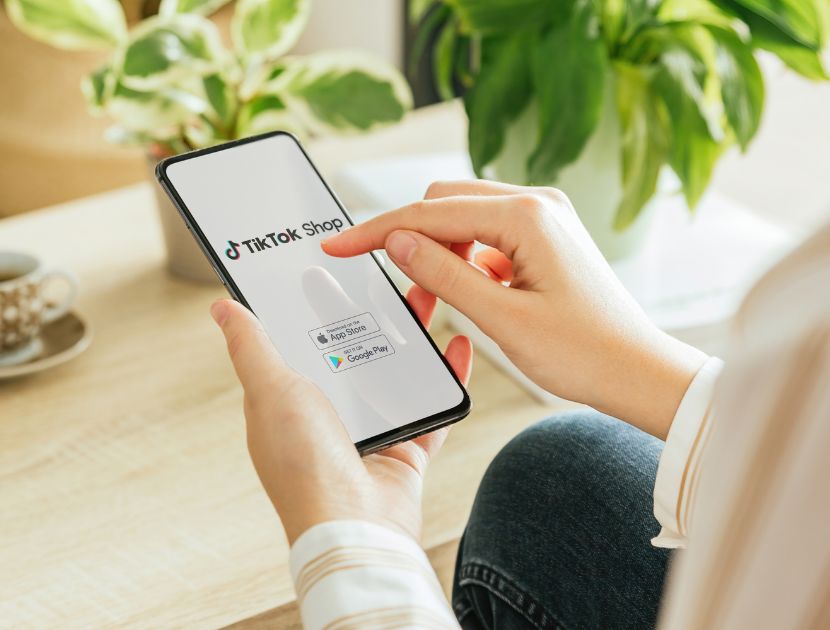
Social platforms are now major shopping channels, but they are designed for speed and emotion, not informed decision making.
Videos are optimized to create urgency and excitement, not to help you evaluate quality, fit, or longevity. That matters, especially when return policies are unclear or restrictive.
Important things to know:
- Many items are private label or mass produced
- Videos often rely on filters, lighting tricks, or pinned comments
- Size charts may be missing, inconsistent, or overly generic
- Return policies can be difficult to find or intentionally vague
Before ordering anything you see on TikTok or similar platforms, always visit the brand’s website.
A legitimate brand should have:
- A clear “About” page
- Transparent return and contact information (a phone number that works)
- Detailed product descriptions and size guidance
If a website feels deceptive, incomplete, or intentionally hard to navigate, that is usually a warning sign. Platforms like Amazon and TikTok have reshaped expectations around convenience, but that convenience often comes at the expense of clarity and accountability.
If you do choose to shop through social platforms:
- Stick to established brands with independent websites
- Avoid countdown timers and pressure-based tactics
- Assume quality is unknown until proven otherwise
Slowing the process down is not a disadvantage here. It is how you protect your time and money.
Step Seven: Use the Wear It Three Ways Rule
Before checking out, pause and ask:
- Can I style this at least three ways with items I already own?
- Does it fill a real gap in my wardrobe?
- Will I still want this six months from now?
If you cannot confidently answer yes, leave it behind.
Step Eight: Use Home Try-Ons to Your Advantage
Trying clothes on at home is one of the biggest advantages of online shopping.
You can:
- See items in natural light
- Test outfits with what you already own
- Step away and revisit the decision later
Time and distance lead to better decisions.
What to Do Next If Online Shopping Has Been Frustrating
Online shopping feels like a gamble when you approach it without a system. With the right framework, it becomes a tool you can actually use to your advantage.
When you shop with clarity about your personal style, accurate measurements, and an understanding of how modern retail works, you keep more of what you buy and stop wasting time and money on returns. The goal is not to shop more. It is to shop better.
If you want to keep building on what you’ve learned here:
- How to Define Your Personal Style helps you make confident decisions before you ever open a browser
- Best Clothing Brands for Women Over 40 offers trusted places to shop once you know what you’re looking for
- 5 Lessons I Learned as a Personal Stylist shares the patterns and mistakes I saw over and over again, and what actually helped clients shop better.
Shopping well is a skill. Once you have the right structure, it becomes easier, calmer, and far more satisfying.
You Might Also Like

Want everything I recommend in one place?
Shop my trusted recommendations
ShopMy is where I save and organize the pieces I consistently recommend, including wardrobe staples, standout finds, and brands I have researched, worn, or genuinely trust. Everything here reflects my years of experience in personal style and the same thoughtful approach I use across The Well Dressed Life.
If you are looking for something specific, or want reliable options without the overwhelm, this is where I start.
Browse my ShopMy
Wonderful insight! I’ll have to make a checklist and keep it next tu o my computer.
For those items with the extended return dates, I add a reminder/appointment in my calendar. It is especially handy for the cosmetic items that give you 60 days satisfaction guarantee. It also reminds that I can throw away the box the item came in if I’m not going to return it.
Thanks Megan for the helpful hints for online shopping. Your post is very timely given that yesterday I was totally frustrated with Kohl’s and how they handle returns. I’m generally not a Kohl’s shopper for women’s clothes, but due to being home and numerous ads inundating my email, I decided to order some items from Kohl’s. They didn’t work out and need to send them back. Well, Kohl’s return policy is return to the store or your on your own for shipping. They don’t even give you one of those pre paid labels that they would charge a fee for like some other stores do. So, given I am not going to the post office or UPS or waiting until the store opens in a few months, I had to get a box, weigh the box, measure the box and figure out how much it would be through UPS. Then pay and print the label and finally put it out for the UPS guy to take. All that said, beware of the Kohl’s returns.
Thank you for this very helpful information especially the “Who and What to Avoid” section. There is a scam company out of China with popup ads of beautiful unique clothes. Most of their ads are stolen photos of clothing sold by reputable companies like Sundance Catalog and other specialty sites. The scam company changes its name frequently to mislead people. Beware of the popup ads of clothes with prices that look too good to be true!!!!
Thank you for your many well thought out and informative posts. Your blog is the BEST!!!!
Great article. I agree with Rita on the scam companies out of China. I try to google the company name and find out where the item is coming from. I have had the same problem when ordering on Amazon. Try and find out where the company is located that you are buying from. Megan thank you for the great information that you are providing.
Megan – this is so thoughtful and helpful! I think you have captured our current approach to shopping and what possibly lies ahead. Love your blog! Thank you!!
Great article! I must add, the measurements aren’t correct on the charts, my waist measurements say i should wear a 6-8 in the waist of a fit and flare dress style, but 4 actually fit, in Talbots, Tommy Hilfiger, Anne Klein, Gal Meets Glam, and Boden. I also have from Target their plain white cotton shirt in both small AND medium, the measurements are exactly the same. If stores really want our business they need to actually measure the finished garments, instead of a size chart, it also addresses how tight or loose each person wants their fit to be on them. I noticed Uniglo gives garment measurements, and jeans on Nordstrom, but the “ size charts” seem outdated to me, in the world of online shopping.
Thank you Megan…very helpful! I especially like your tip to keep personal measurements in “notes” on your device. I miss the old days of social shopping but I am adjusting.
Unfortunately the fabrics never look as good in person as they do on the websites. I’m usually disappointed with online purchases.
Thanks for such an informative post! I miss regular in store shopping- it’s been such a big part of my life that doing it all online is just not as fun! BUT- I can adapt and your guidelines are so helpful. I did see Kohl’s now carries LandsEnd not sure if you can return online LandsEnd orders to Kohl’s or not.
Unfortunately, you can only return Lands End items to Kohl’s if you purchased them through the Kohl’s website. Otherwise, they either have to be mailed back or returned to a Land’s End store
I do most of my shopping on line, and did so before the pandemic, because plus size options are better in cyberspace. I’ve found I buy most of my clothing from 3-4 retailers, and because I do this, I have a good idea of how the items will fit based on the pictures and reviews. I avoid retailers who charge for shipping on a return. With the original charges, that can amount to a $20 try on. Also, if you find you like a retailer, you are likely to buy enough to get free shipping, as, for example, I do on any purchase made at Macy’s. Another good tip is to sign up to be whatever the brand calls its “insider” group. That usually is free to do and can result in free shipping. Finally, if you call the bricks and mortar store, they can place your order and the shipping is free to your home. I do this often through my local Talbots.
I would add to all the above, to check for how to care for the clothing item. I’ve run into the occasional label which provides no care information online. Dry cleaning is a deal breaker for me for most things, and I won’t order items that don’t provide this information.
I order on-line and prefer it this way. I am disabled and find walking around a mall very difficult and a frustrating event. I wear women’s clothing and in-store options are few. I order from a few catalogs. I know their fabrics and fit plus I find soooo many more clothing options. I’ve made it a point to do business with businesses that meet my need and want my business!
I did purchase several items from stores that I have always found what I liked and the fit was perfect
However my online purchases were not as successful. I don’t know why but sizes I usually fit in and arrived and were either toot small or too big. It was frustrating. I should have read the comments from others and figured out what size I should be purchasing g. Thank you for this guideline.
I have a question. I’m a large busted woman of 71. Do I measure my bust size without a bra for support or with one. Thank you.
I would measure wearing the bra you typically wear. 🙂
Thank you for this helpful post. I wish more retailers provided garment measurements. That would make online shopping so much easier.
I always look forward to your posts, read them start to finish and find this one to be most helpful. There is always a nugget of information to make life easier. Thank you!! I order on line a lot but only keep about 50%, I will use these tips and hopefully have better success.
Thanks so much Cathy!!
Thanks for the tips! I’ve been doing a lot of online shopping recently with varying results. Do you have any thoughts on the “True Fit” recommendations? I ordered a jacket from Talbots using their size charts and it was huge on me. When I looked at the True Fit recommendation, I should have ordered 2 sizes down.
I’m not sure. Talbot’s in particular is notorious for running full sizes large so in that case, yes. I like reader reviews so much more, maybe the answer is using a combination of the two?
My only problem with online shopping, and maybe you have some tips, is quality. How can you tell the quality is good just by looking at something online?
You can’t. You have to read reviews, shop stores and brands you know and already wear, find trusted online resources like our site that vet products for you. It’s still a chance you won’t like it, but with a little bit of work, those buys will be rare.
I just can’t get through your posts anymore because of SO. MANY. ADS. Seriously, it’s awful. Please consider mobile readability/usability. Better yet, try it on your mobile device first for a firsthand user experience. It damages your brand.
This is a free website, running ads is the only way we are able to generate a regular income. There is no site without them.
Thanks for this good information. I wear petite sizes and since 2020 they are nowhere to be found in stores. Initially I was upset about it, but now I can really say that I prefer shopping online. There are 2 sites, Old Navy and the Loft where I know I can find great sales and reasonably priced on trend petite clothing. They have easy return policies too. I have also explored Short Story, a shopping service for petites. I have had reasonable results. Sometimes you just have to let go of the old ways of doing things and explore the new!
Other good petite options are at Nordstrom, Banana Republic has a LOVELY selection and Talbots for basics.
It’s so true that on-line shopping is the best!!! I just about only shop on-line except for purses, shoes, accessories and fine jewelry!!!! Being disabled has affected my decision to shop almost exclusively on-line!!! I’m simply unable physically to shop the stores as I once did!!! I do really enjoy shopping for fine accessories!!!
Ordering online using a brand’s size chart is an educated guess at best. It’s hard to tell how a garment in my (plus) size will look on me when a size small is shown on a waiflike model. As for quality, read the “fabric and care” section on the product page as well as reviews. Anything with a high synthetic fiber content will not feel, look, or wear the same as one made of natural fibers. That said, natural fibers are not necessarily created equal. The $50 cashmere sweater from Quince is not going to be as good quality, look as good, or hold up as long as a more expensive one.
I’ve had great luck with Quince and think it’s really important to offer reasonably priced options to readers who want natural fibers but either don’t want to or can’t afford to spend more.
I’m not finding the size charts to be accurate online, my measurements are not correlating fit wise, I wish they would measure the garment flat like eBay items. Also i am finding loft sizes inconsistent, I have tried on xs in store, and received the same garment marked xs online cut too big, this has happened a few times.
Online is nice, but there are some problems still.
Megan, I love your posts. I’m always reminded of what I should be doing (and wondering why I haven’t.) I’m I5’2 and was almost forced into online shopping because smaller sizes and petites in general are quite scarce in the brick and mortar stores. I used to shop mainly Loft/Ann Taylor and Old Navy because of a decent petite selection and reliable fit for the most part. However, I started trying Talbots and J Crew and all bets are off when it comes to things fitting. Why oh why didn’t I just measure myself? Live and learn… thank you!
Great article. The other caution of online shopping is to do thorough research if ordering from a brand you are not familiar with. I made the mistake of clicking a link my son in law sent me for a jacket he was interested wanted for Xmas. I bought it in his normal size (medium). It came after a long wait and was too small. There was no size label in the jacket. Customer service asked me to take measurements so they could see if they sent me the correct size. In the meantime, I checked with trust pilot and found awful feedback. If I read this prior to ordering, I would never have purchased it. I asked for a return label, and they just sent me the address in China to return it to on my dime which based on my limited research would have cost more than the jacket. The business address on their website was the Netherlands. Knowing the return would be difficult they offered me 15% to keep the jacket and not return it. I pushed back and they offered 20% which I accepted just to put this behind me. In the meantime, I gave the jacket to my 11-year-old grandson. The sleeves were too long, but I bet it fits him in a year or two. In addition, their website looked very legit and customer service did respond to my emails. The name of the company was The United Gentlemen. I do not recommend them at all, and regret purchasing from them. I will always check Trust Pilot before purchasing from unknown brands in the future.