
This article is part of Personal Style Discovery Week on The Well Dressed Life. On Day Two, you created a Personal Style Vision Board to identify what you’re visually drawn to. Today, we’re making sure that vision works for the way you actually spend your time.
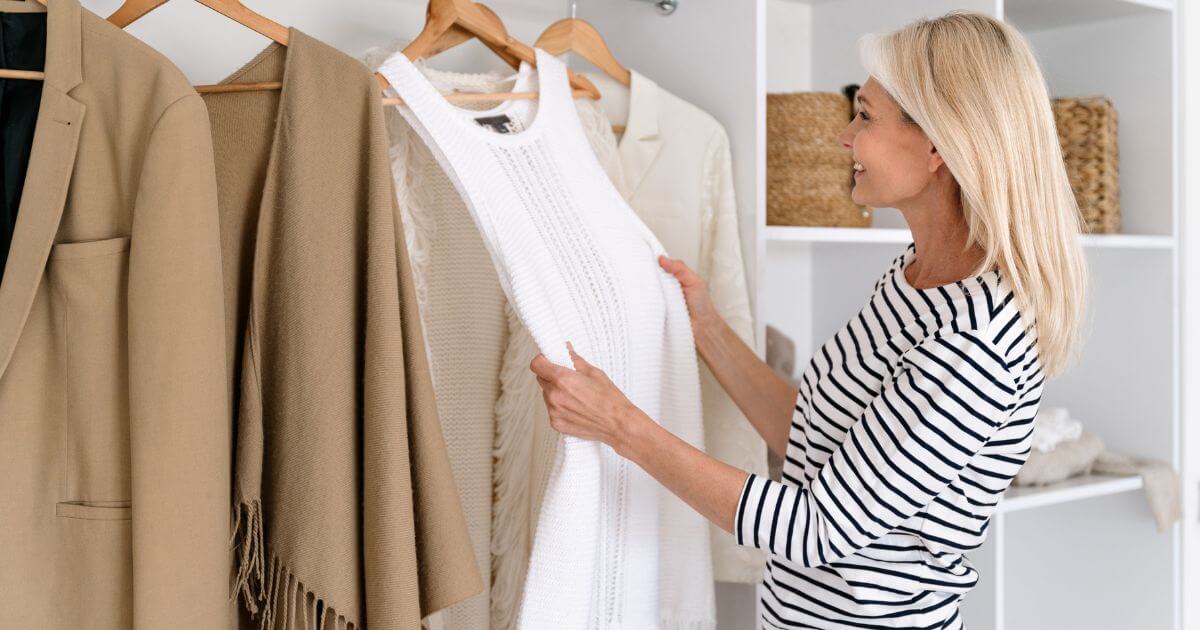
You can have a closet full of clothes and still feel as though you have nothing to wear. Often, the problem has very little to do with how much you own. Your wardrobe simply may not match the life you’re living now.
Perhaps you own a full row of workwear but only go into an office twice a month. Maybe your calendar is mostly casual, but that is the weakest part of your wardrobe. You may have plenty of clothes for special occasions and almost nothing you feel good wearing to dinner with friends.
Every piece may have made sense when you bought it. Collectively, though, your closet can end up representing several past versions of your life instead of the one you’re getting dressed for today.
Before you shop, edit your closet, or make a list of what you think you need, it helps to understand how you actually spend your time. I call this exercise the Lifestyle Diagram, and it was one of the first conversations I had with every private styling client.
Why Your Wardrobe Can Stop Working
Most of us don’t wake up one morning and decide to stop wearing half of what we own. The disconnect happens gradually as our lives change.
A job ends, changes, or moves from an office to home. Children arrive, grow up, or leave, and each change reorganizes your schedule. Your body changes, your social life shifts, or you move somewhere with a different climate and pace. Dress codes have also become more casual and much harder to interpret.
Each of these changes affects what you need from your clothes, but your closet does not automatically update along with your calendar.
You may still own blazers from a job you left, cocktail dresses from a time when you attended more formal events, or structured work clothes that made sense when you commuted five days a week. Meanwhile, the clothes required by your current life are limited, disconnected, or bought quickly because you needed something immediately.
This is why buying more clothes often fails to solve the problem. If you don’t understand what your wardrobe needs to support, new purchases can simply create more options for occasions that already have plenty of them.
What Is a Lifestyle Diagram?
A Lifestyle Diagram is a simple visual representation of the different kinds of clothes your regular life requires.
Think of it as a rough pie chart divided into categories such as work, casual activities, exercise, social plans, events, travel, and time at home. The percentages don’t need to be scientifically precise. You’re trying to see which categories dominate your life and whether your wardrobe reflects them.
The exercise is based on your current life. It doesn’t represent the schedule you had five years ago, the one you hope to have someday, or the version of your week that exists only when everything goes according to plan.
This is not about limiting yourself to purely practical clothes. Your wardrobe should still reflect your taste and give you room to enjoy fashion. The Lifestyle Diagram simply gives those preferences a structure. Your Personal Style Vision Board shows you how you want to look. Your Lifestyle Diagram shows you where those clothes need to take you.
Step 1: Map a Typical Two Weeks
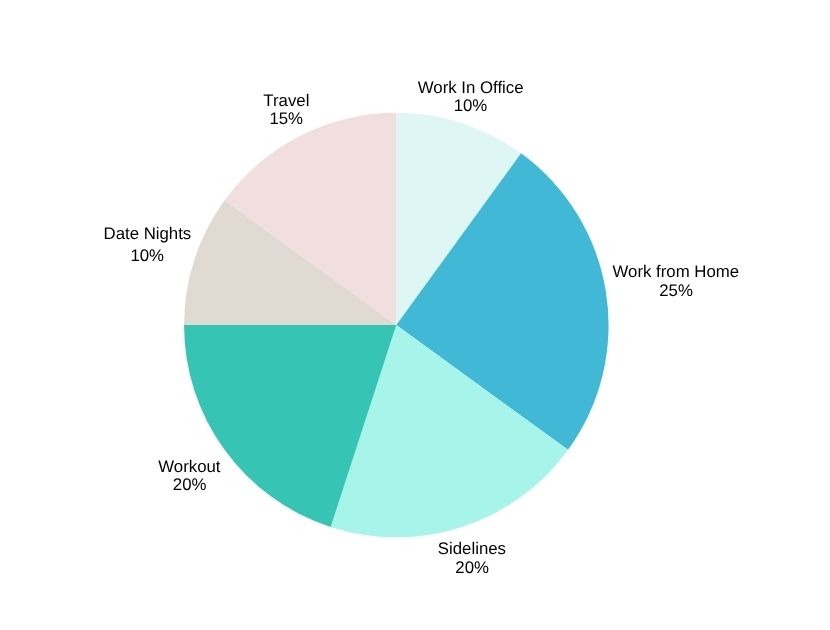
A single week can be unusual, so look at a typical two-week period instead. Think about the places you regularly go and the activities that require you to get dressed.
Your categories might include:
- Working from home
- Working in an office
- Meetings or professional events
- School activities or caregiving
- Errands and appointments
- Exercise
- Casual lunches or dinners
- Religious services or community activities
- Date nights or social events
- Formal occasions
- Travel
- Time at home
Combine categories that require essentially the same clothing. Working from home, running errands, and school pickup may all fall under casual everyday clothes. An office day and a professional lunch may use the same work capsule.
Then estimate what percentage of your dressed life each category represents. The goal is not to account for every hour. Sleeping for eight hours does not mean pajamas should receive one-third of your wardrobe. Think about the frequency with which you need each kind of outfit.
A woman who works from home and goes out for casual plans several times a week might discover that her wardrobe needs are approximately:
- 60 percent casual everyday clothes
- 15 percent exercise clothes
- 15 percent casual social outfits
- 5 percent professional clothes
- 5 percent occasion clothes
Your diagram may look completely different. There is no ideal breakdown and no correct answer. Its only job is to show you what your life asks of your wardrobe.
Step 2: Be Honest About Your Current Life
This is the most important part of the exercise and sometimes the most uncomfortable.
We often shop for the version of our lives we find most appealing. Special-event clothes are more exciting than everyday basics. Workwear may feel connected to an earlier professional identity. Vacation clothes are more fun to buy than the jeans and shoes we need for an ordinary Tuesday.
There is nothing wrong with keeping clothes for parts of your life that happen less frequently. You need something to wear to a wedding even if weddings account for a tiny percentage of your year. The problem begins when occasional categories take up most of the closet while the clothes you need constantly are treated as an afterthought.
At one point, I mapped my own schedule and realized that roughly 70 percent of my life was casual. I was working from home, handling school pickups and errands, and spending most evenings in relaxed settings. But my wardrobe was still weighted toward workwear and occasion pieces that I rarely needed.
I wasn’t short on clothes. I was short on the right clothes for the life I was actually living. Seeing that distinction changed how I shopped and what I prioritized.
Step 3: Compare Your Diagram With Your Closet
Now look through your closet with the diagram in mind. You are not pulling everything out or deciding what to donate yet. Today, you’re simply observing.
Ask yourself:
- Which parts of my life are well represented?
- Which categories take up more space than their role in my life requires?
- Where do I repeatedly feel as though I have nothing to wear?
- Which clothes am I asking to do most of the work?
- Do I have enough variety in the categories I wear most often?
- Are there clothes I love but rarely have an opportunity to wear?
- Which category causes me to panic-shop?
You may discover that your wardrobe is generally functional but has one significant gap. A client once came to me convinced she needed to start over. Her Lifestyle Diagram showed that most of her closet worked perfectly well. She was missing clothes for the relaxed social life she had developed after moving to a new city.
We didn’t replace everything. We focused on the one neglected category, removed a few pieces that no longer served her, and gave her more options for the life she was actually living.
This is often where the “nothing to wear” problem becomes specific enough to solve.
Step 4: Compare Your Diagram With Your Vision Board

Yesterday, you collected images representing how you want to dress. Today, look at that board again through the lens of your Lifestyle Diagram.
Do the images support your real schedule? If most of your life is casual, does your board include casual outfits you could genuinely wear? If you work in an office several days a week, have you included enough professional inspiration? If you regularly attend dinners, school events, or community functions, can you see versions of those outfits on your board?
Your vision board does not have to match your Lifestyle Diagram in exact percentages. It should, however, include enough inspiration for the parts of your life that require the most clothes.
If your board is filled with outfits for a life you don’t live, don’t throw it away. Look for the elements you can translate. Perhaps you are drawn to the color combinations, proportions, accessories, or use of texture. A formal outfit may contain an idea you can adapt to a more casual setting.
The goal is to bring your taste and your life into the same conversation.
Step 5: Identify the Gaps
Once you can see where your wardrobe is out of balance, write down the categories that need attention. Do not make a detailed shopping list yet. For now, name the problem as specifically as you can.
Instead of writing “I need more clothes,” you might write:
- I need casual outfits that feel more intentional than workout clothes.
- I need shoes that work with my everyday pants and can handle a lot of walking.
- I need a small group of outfits for going into the office twice a week.
- I need two dependable options for casual dinners.
- I need warm-weather clothes that work outside the house.
- I need something between jeans and a cocktail dress for less formal events.
Specific problems lead to useful purchases. Vague dissatisfaction leads to more of the same.
You may also realize that you already own the clothes you need but are missing a connecting piece. The right shoes, jacket, layer, or undergarment may turn several neglected items into wearable outfits.
Step 6: Adjust Your Priorities
The categories you wear most frequently deserve the greatest share of your attention and wardrobe budget. That doesn’t mean every everyday item needs to be expensive. It means these pieces should fit well, coordinate easily, and withstand regular wear.
If most of your life is casual, your best jeans, knitwear, tees, casual dresses, and comfortable shoes are not secondary purchases. They are the foundation of your wardrobe.
If you go into an office twice a week, you may need a small group of versatile work pieces rather than a full corporate wardrobe. If your social calendar includes frequent dinners and events, a handful of dependable outfits that can be styled differently will serve you better than pieces purchased for one specific occasion.
Less frequent categories still matter, but they usually do not need the same depth. You need an outfit for a funeral, an interview, or a formal event. You probably don’t need an entire section of your closet devoted to possibilities that rarely occur.
Step 7: Use the Lifestyle Diagram While Shopping
Before buying something, ask: Where does this fit into my actual life?
Try to picture when you would wear it, what you would wear it with, and whether that category of your wardrobe genuinely needs another option.
This doesn’t mean you can only buy something if you plan to wear it within the next few weeks. Seasonal clothing, travel pieces, and occasion wear may have a clear purpose even when the event is not immediate. The point is to understand what role an item will play before bringing it home.
I used this exercise during a sale when I had filled my cart with pieces I genuinely liked. Once I compared them with my actual wardrobe needs, I began taking things out. The clothes were still beautiful, but several of them belonged to categories that were already well covered. I spent less and came away with pieces I was far more likely to wear.
You can appreciate something without needing to own it. Your Lifestyle Diagram helps you recognize the difference.
Your Wardrobe Should Change When Your Life Does
Your Lifestyle Diagram is not a contract, and your wardrobe is never permanently finished. Revisit the exercise when something meaningful changes in your schedule, body, location, work, or responsibilities.
You may also have distinct summer and winter diagrams if your life changes significantly between seasons. A summer at the shore may require a very different wardrobe from fall at home. You don’t need to redo the exercise simply because the calendar changed, but it is worth revisiting when the way you spend your time changes too.
The value of the Lifestyle Diagram is that it gives you a repeatable place to start. When your wardrobe feels off again, you can determine whether your taste has changed, your life has changed, or your closet has simply fallen out of balance.
During Personal Style Discovery Week, your vision board has shown you what you like, and today’s Lifestyle Diagram has shown you what you need. Tomorrow, we’ll look inside your closet for evidence of what already works and begin connecting those two pieces.
Frequently Asked Questions
How often should I redo my Lifestyle Diagram?
Revisit it whenever your life changes enough to affect what you wear. A new job, retirement, a move, a change in climate, different caregiving responsibilities, or a shift in your social life are all good reasons to update it. You do not need to recreate it every season unless your schedule changes seasonally.
How precise do the percentages need to be?
They are only estimates. The purpose is to see the relative importance of each wardrobe category, not to create a perfect accounting of your time. If drawing a pie chart feels unnecessarily complicated, use a simple ranked list.
How many outfits do I need?
There is no universal number. It depends on how often you do laundry, how much variety you enjoy, your climate, and how frequently your activities repeat. Start by identifying where you regularly run out of good options. That will tell you more than an arbitrary wardrobe total.
What should I do with clothes that no longer fit my life?
Don’t remove them solely because they represent a small part of your diagram. Consider whether you still need them occasionally, expect to need them again, genuinely love them, or have room to store them.
The diagram helps you understand why you aren’t wearing something. You can make decisions about what stays during your closet review.
What if my lifestyle changes again?
It will. The goal is to build a wardrobe that can adjust with you, not to predict every future need. When your life changes, update the diagram and use it to reconsider your wardrobe priorities.
You Might Also Like





Want everything I recommend in one place?
Shop my trusted recommendations
ShopMy is where I save and organize the pieces I consistently recommend, including wardrobe staples, standout finds, and brands I have researched, worn, or genuinely trust. Everything here reflects my years of experience in personal style and the same thoughtful approach I use across The Well Dressed Life.
If you are looking for something specific, or want reliable options without the overwhelm, this is where I start.
Browse my ShopMy
Leave a Comment