

26 Things to Declutter From Your Closet in 2026 (and Why Letting Go Feels So Good)

Have you ever opened your closet and felt immediately overwhelmed? This list is for you.
That feeling usually comes from accumulation, not a lack of organization. Too many clothes that no longer fit well, support your current lifestyle, or reflect who you are now. Wardrobe decluttering is about identifying what is no longer working and clearing space so getting dressed feels easier.
I’ve spent nearly two decades helping women navigate closet clean outs, first as a personal stylist and now through The Well Dressed Life. What I’ve learned is that decluttering is not about minimalism, perfection, or getting rid of things just to say you did. It is about reducing friction. When your wardrobe supports your real life, getting dressed stops feeling like work.
A closet clean out in 2026 is about reassessing what you actually wear, what still fits your body and lifestyle, and what is quietly making your mornings harder than they need to be.
Some women feel their best with a small, streamlined wardrobe. Others thrive with options and variety. There is no right number of items to own. What matters is whether what you keep supports how you live now.
By this stage of life, closets tend to fill up in subtle ways. Clothes from former jobs, former bodies, and former seasons. Items we spent money on and feel conflicted about. Pieces we keep because deciding what to do with them feels like one more decision on an already full plate.
Letting go feels good because it simplifies decisions. Fewer choices. Less visual noise. More confidence in what you wear and how you feel wearing it.
The categories below are designed to help you declutter your wardrobe with clarity and less second guessing. My goal is for you to recognize a category that resonates and take action immediately. Start where it feels easiest and let momentum build.
Closet Decluttering Checklist: Quick Navigation
- How to Start Your Closet Clean Out
- 26 Things to Declutter
- Closet Decluttering FAQs
- The Emotional Side of Decluttering
How to Start Your Closet Clean Out

If you have tried to declutter before and found yourself stuck, you are not alone.
Before you start pulling things out of your closet, it often helps to begin with a mindset shift. I wrote more about that in one of my most popular articles, How to Purge Clothes: 7 Mindset Shifts to Make Letting Go Easier, and it is a genuinely helpful place to start if you tend to second guess yourself.
If you are ready to dive in, keep scrolling for a practical, no pressure checklist you can use at any time of year.
My approach is simple. Keep what you love, need, and actually wear. Let go of the rest.
These 26 categories are not random. They are the most common patterns I have seen again and again while helping women navigate the emotional and practical side of a closet clean out.
You do not need to tackle everything at once. One drawer, one rack, one small decision at a time is enough.
26 Things to Declutter From Your Wardrobe
FREE DOWNLOAD
Get the Wardrobe Essentials Checklist
A simple wardrobe inventory to help you see what you own, spot the gaps, and shop with a plan. I’ll email it to you when you subscribe.
1. Clothes That Don’t Fit
This seems obvious, but it’s far more loaded than it sounds. If something is too small, too big, or consistently uncomfortable, it creates emotional clutter. Make space for the body you have now, not the one you used to have or hope to have someday.
I say this as someone who has gone through both weight gain and weight loss. The hardest clothes for me to let go of were the ones that were too big. I was deeply unhappy wearing them, yet hesitant to remove them. Eventually, I set a one-hour timer, grabbed a large shipping box, filled it with everything that no longer fit, and got it out of my house immediately. I never looked back or regretted it.
2. Clothes You’re Keeping “Just in Case”
Just in case of what? A lifestyle you no longer live? A version of yourself you’ve already outgrown? These pieces quietly stall your closet. Either decide they deserve a regular place in your rotation or let them go.
3. Damaged or Worn-Out Items
When I worked with private clients, I was often surprised by how reluctant they felt to part with obviously stained, ripped, or stretched-out clothing. What I was really witnessing was a psychological tug-of-war. Clothes carry intention, money spent, and the hope that something might still be “fixed” someday.
If something needs repairing and you haven’t addressed it in months, it’s time to make a clear decision. Either commit to getting it mended now or let it go. Your clothes should be ready to wear, not sitting in your closet as another mental to-do item.
4. Old Trends You’re Over
You’re allowed to evolve. If a once-trendy piece no longer feels like you, it’s done its job. Trends are meant to reflect a moment in time, not live in your closet forever.
You may also like Where to Splurge, Spend and Save in Your Wardrobe.
5. Wire or Cheap Hangers
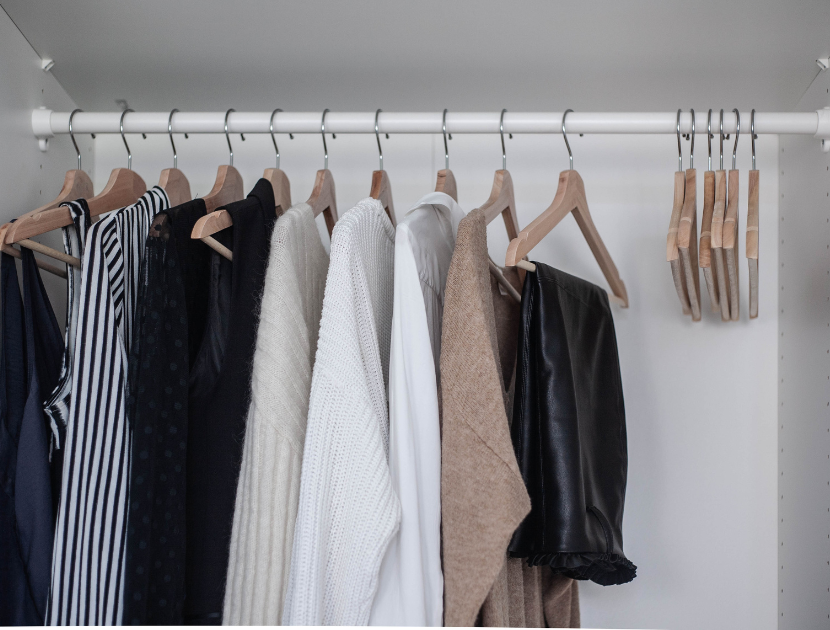
This may feel minor, but it makes a noticeable difference. Wire and flimsy plastic hangers distort clothes and create visual clutter. Switching to slimline or velvet hangers protects your clothes and makes your closet feel calmer and easier to use.
6. Uncomfortable Shoes
If a shoe only works when you’re sitting down, it’s not working. At this point, we’re too old for sore feet. If it hurts by noon, it’s not worth the space.
If this part feels harder than expected:
Decision fatigue often shows up here. If you tend to second guess yourself, start with How to Purge Clothes: 7 Mindset Shifts to Make Letting Go Easier.
7. Worn-Out Undergarments
Stretched bras and tired underwear drag down everything you wear over them. This is one of the most overlooked wardrobe upgrades.
8. Promo Tees and Freebie Clothing
Aside from the occasional sentimental piece, freebie clothing doesn’t belong in your everyday wardrobe.
9. Sentimental Items in Prime Closet Space
Sentimental pieces deserve care, but they don’t need to create daily visual noise.
I pulled meaningful items for myself and my daughters and stored them separately in a dedicated space with cedar blocks and moisture absorbers. They’re safe, protected, and no longer competing with the clothes we actually wear.
10. Formalwear You Haven’t Worn in Years
That bridesmaid dress from a decade ago isn’t getting altered. Donate decade-specific formalwear while it still has life left.
11. Clothes That Make You Feel “Off”
If something consistently leaves you feeling unsure or uncomfortable, trust that instinct.
12. Workout Clothes That No Longer Perform
Leggings that sag and bras that no longer support quietly sabotage motivation.
13. Shoes That Are Beyond Repair
If they’re falling apart or uncomfortable due to wear, they’ve reached the end of their life cycle.
14. Gifts That Aren’t Your Style
Gratitude doesn’t require storage. Let someone else enjoy them.
15. Coats That Don’t Fit or Flatter
A coat is often the first thing people see. If it makes you feel frumpy instead of polished, it’s not doing its job.
If you’re unsure what should replace what you let go of, How to Figure Out Your Wardrobe Essentials can help.
16. Items With Tags Still Attached After a Year
If you’ve lived a full year without wearing it, it doesn’t belong in your real life.
17. Pieces You Always Skip Over
If you consistently avoid something, there’s a reason.
18. Clothes From a Past Life
If your lifestyle has shifted, your wardrobe should reflect that.
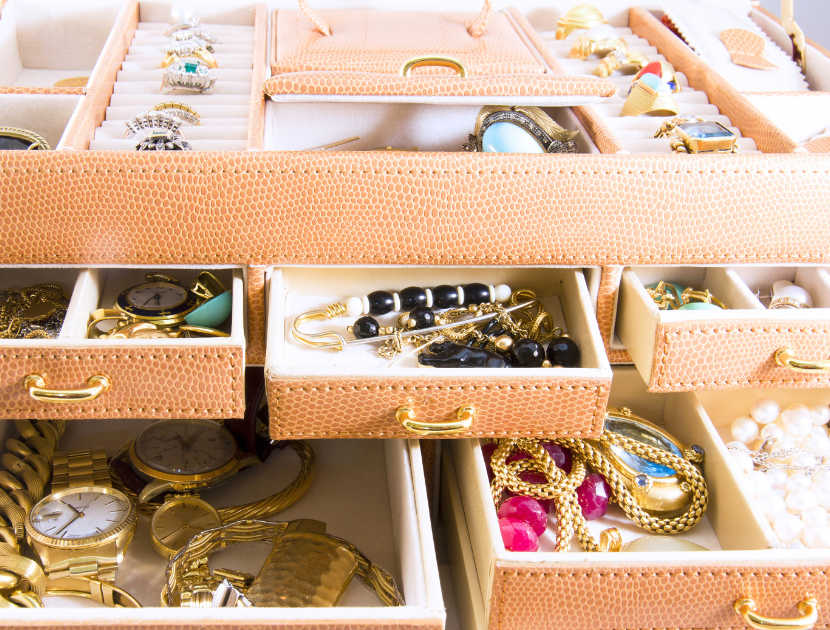
19. Accessories You Never Use
If you forgot you owned it, it’s not adding value.
20. Costume Jewelry You’ve Outgrown
Let go of broken, tarnished, or dated pieces and organize what remains so you actually wear it.
21. Excess Scarves
A few versatile options go much further than a crowded drawer.
22. Faded Black or Dingy White Basics
Refreshing basics often has a bigger impact than buying something trendy.
23. Worn or Ill-Fitting Belts
Cracked leather and stretched elastic add nothing to an outfit.
24. Holiday-Themed Pieces You Never Wear
If it’s sat untouched for years, it’s unlikely to suddenly get worn.
25. Impulse Buys That Never Made Sense
If something never worked from the start, stop trying to force it.
26. Clothes That Hold Bad Memories
If something reminds you of a difficult season, letting it go can be an act of care.
Simple Tools to Organize What’s Left
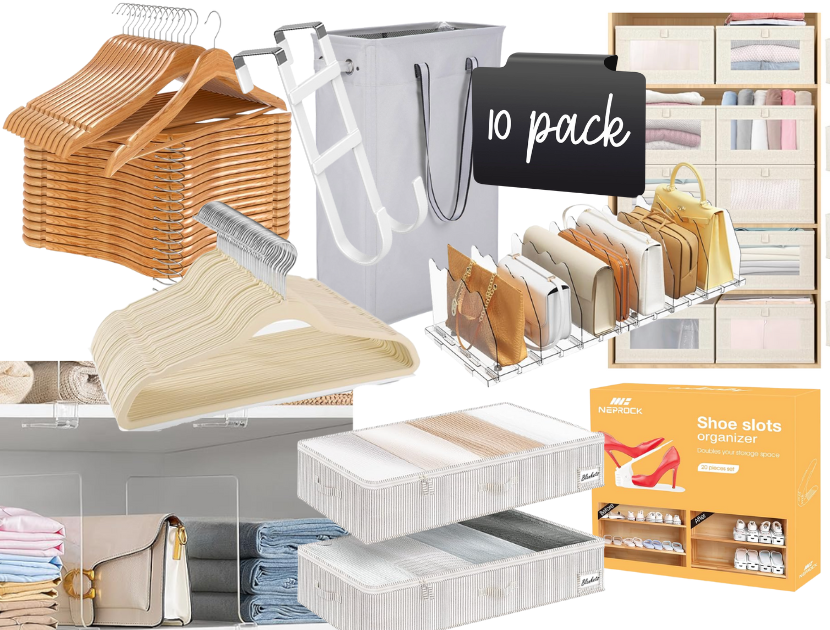
Once you’ve cleared out what no longer serves you, then it makes sense to organize.
There’s no point in creating systems for clothes you don’t want to keep. But once you’ve done the edit, the right tools can make your closet easier to use and maintain.
Over on Substack, I shared the organizing solutions I actually use in my own home. They’re practical, realistic, and designed to support daily life.
👉 Check out my favorite closet organizing tools here.
Closet Decluttering FAQs
How often should I clean out my wardrobe?
Most experts recommend a closet clean-out every 6 to 12 months, but there is no strict rule. A seasonal refresh at the start of spring or fall works well for many women. You should also declutter anytime your lifestyle shifts, such as a job change, body change, move, or new phase of life. The goal is not frequency, but alignment.
How do I decide what to keep?
I always come back to three simple questions:
- Do I wear it?
- Do I love it?
- Do I need it?
If the answer is no across the board, it is likely not earning its place in your closet. If you hesitate, ask yourself whether you would buy it again today. That question is often very clarifying.
What if I feel guilty about getting rid of expensive clothes?
Guilt is common, especially when money is involved. But keeping something you do not wear does not recover the cost. It only adds visual and mental clutter. If an item is in good condition, consider selling or donating it so someone else can use it. That is often more satisfying than letting it sit unused.
Should I sell or donate unwanted clothes?
If selling feels motivating and manageable, platforms like Poshmark or ThredUp can be useful. If it feels like another chore, donating is often the better choice. Clothing drives, local shelters, and nonprofit organizations are usually grateful for wearable items. We break this down in detail here: What to Do With Clothes You Don’t Want: Best Ways to Resell, Donate, or Recycle.
What should I do with sentimental clothing items?
Sentimental pieces deserve care, but they do not need to live in your everyday closet. Store them separately in a memory box, bin, or under-bed container. If space is limited, taking photos of especially meaningful items can help you preserve the memory without keeping the physical piece.
How do I declutter if I have a small closet?
Small closets benefit most from editing first and organizing second. Focus on keeping only what you actively wear, then use vertical storage, slim velvet hangers, drawer dividers, and over-the-door hooks to maximize space. Clear bins and consistent storage systems also help reduce visual clutter.
What if I’m afraid I’ll regret getting rid of something?
Regret is far less common than people expect. If you’re unsure, place questionable items in a temporary holding bin for 30 to 60 days. If you do not miss or retrieve them, you have your answer. Most women never go back into the bin.
How do I stop clutter from building up again?
Be intentional when shopping. Avoid buying for hypothetical situations. Try a one-in, one-out approach, and keep a small donation bag in your closet so editing becomes ongoing instead of overwhelming. Decluttering works best as a habit, not a once-a-year event.
Where should I start if I feel overwhelmed?
Start small. Set a 15 or 20-minute timer and focus on one category, such as shoes, workout clothes, or tops. Momentum builds quickly once you see progress, and you do not need to finish everything in one session.
How do I know if something is worth keeping even if I don’t wear it often?
Occasional pieces can still earn their place if they serve a clear purpose and fit your current life. The key is intention. If you are keeping something without a clear reason or realistic occasion, it is probably adding more stress than value.
Decluttering isn’t about having a perfect closet. It’s about making room for the life you’re actually living.
When your wardrobe supports your body, lifestyle, and values, getting dressed becomes easier and more confidence-building. You don’t need to do everything at once. Start small. Come back to this checklist whenever you need a reset.
A Note on the Emotional Side of Decluttering

If this process feels surprisingly emotional, you’re not imagining it. Letting go of clothes often means letting go of versions of ourselves, and that can feel heavier than the physical task.
I saw this constantly when I worked with private clients. The emotional weight is often what stalls progress, not a lack of organization or discipline. Decluttering isn’t about achieving some ideal closet. It’s about making room for the life you’re living now
If you’re feeling stuck here, these resources can help you move forward with more clarity and confidence:
- How to Purge Clothes: 7 Mindset Shifts to Make Letting Go Easier
- How to Figure Out Your Wardrobe Essentials
- What to Do With Clothes that No Longer Fit Hanging in Your Closet
And if you want to explore the emotional side of this more deeply, I wrote an essay on Substack about the weight we carry in our closets and how making space helped me feel more like myself again.
You Might Also Like


Want everything I recommend in one place?
Shop my trusted recommendations
ShopMy is where I save and organize the pieces I consistently recommend, including wardrobe staples, standout finds, and brands I have researched, worn, or genuinely trust. Everything here reflects my years of experience in personal style and the same thoughtful approach I use across The Well Dressed Life.
If you are looking for something specific, or want reliable options without the overwhelm, this is where I start.
Browse my ShopMy
We all need these timely reminders.
These are spot-on, Megan! I am ready to take a hard look at everything in my closet. I think I will work through the list, one item at a time. I have a hard time letting go of clothing, so it will be good if some items get reviewed more than once!
Great list. I have some of each and need to purge!
This is such brilliant advice. I began a big purge about a week ago and have already implemented many of your suggestions, but thanks to you I am realizing there is even more that needs to go because it is no longer serving me. Right now I am focusing on the disaster area that is my closet/beauty stash, but I think much of what you say is applicable to other types of household clutter as well. Books I will never reread, supplies for hobbies I no longer pursue, kitchen appliances I never use, dishes that are chipped or mismatched, dingy linens, gifted items I have never liked … you get the idea.
Love this, thanks for sharing! I spent a big chunk of 2024 editing my whole house and it’s crazy how these work across the board!
What about clothes you’re unsure of because currently you don’t a top or a bottom(depending) to go with it. Do you look for top or bottom or get rid of the piece in your closet taking up “ valuable real estate”?
Thanks
Karen
Need directions for setting up an organized closet
There are a lot of great resources linked in the article.
Thank you Megan. This is what I need to read as I go into my first year of retirement. I have already sent four bags of work clothes to the op shop. New Year = New Mindset.