
One of my favorite parts of this series is discovering where spending more actually makes a difference. Sometimes a higher price buys noticeably better materials and craftsmanship. Other times, the less expensive option delivers almost everything you want for a fraction of the cost.
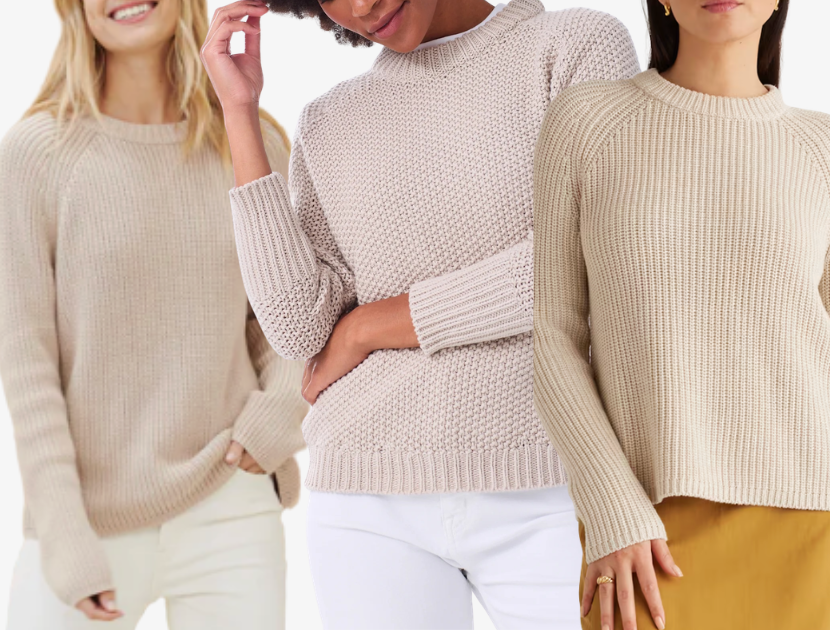
Today, we’re comparing three classic cotton fisherman sweaters to see where they fall.
This is one of my favorite wardrobe staples because you can wear it almost year-round. Throw it over your shoulders on a cool summer night, pair it with white jeans in early fall, layer it under a quilted jacket in the winter, and pull it back out again in the spring. It always works.
It also has that cozy, Nancy Meyers feel that I love. It’s relaxed without looking sloppy, classic without feeling dated, and one of those pieces that can become a true workhorse in your wardrobe.
At first glance, these three sweaters have a lot in common. They’re all made from 100% cotton, they’re all inspired by the traditional fisherman knit, and they’re all promise years of wear. But once you start looking at the yarn, the weight of the knit, the finishing details, and the overall construction, the differences become much easier to spot.
So, is a nearly $300 cotton sweater really worth it? Or can you get the same look for considerably less? Let’s take a closer look.
What to Look for in a Cotton Fisherman Sweater
Cotton Quality
Not all cotton sweaters are created equal.
Long-staple cottons, like Peruvian Tanguis or Pima cotton, produce smoother, stronger yarns that are softer to the touch and less likely to pill over time. They also tend to hold their shape better after repeated washing.
That doesn’t mean standard cotton isn’t good. Many everyday sweaters are made from conventional cotton and perform beautifully. The quality of the yarn and how it’s knit often matter just as much as where the cotton comes from.
Knit
One of the biggest differences between price points is the knit itself.
A well-made fisherman sweater should feel substantial without being stiff. The textured stitches should be evenly knit, the ribbing should have good recovery, and the sweater should hold its shape without stretching out after a few wears.
Less expensive versions often feel lighter or a little flatter because less yarn is used during construction.
Fit
The best fisherman sweaters have an easy, relaxed fit without looking oversized.
This style was originally designed as a hardworking utility sweater, so it should feel comfortable enough to layer while still maintaining some structure. Look for dropped shoulders that don’t overwhelm your frame and a length that hits around the hip for maximum versatility.
Construction
As always, pay attention to the finishing details.
Look for fully fashioned construction, clean seams, sturdy ribbing at the neckline, cuffs, and hem, and a sweater that feels balanced in your hands. These details may not stand out immediately, but they’re often what separates a sweater you’ll wear for years from one that starts looking tired after a season.
Weight
Weight is one of the easiest ways to distinguish a premium cotton sweater from an inexpensive one.
Heavier knits tend to drape better, feel more substantial, and hold their shape over time. Lighter sweaters aren’t necessarily lower quality, but they often have a more casual feel and may stretch or lose structure more quickly with regular wear.
Splurge: Jenni Kayne Cotton Fisherman Sweater
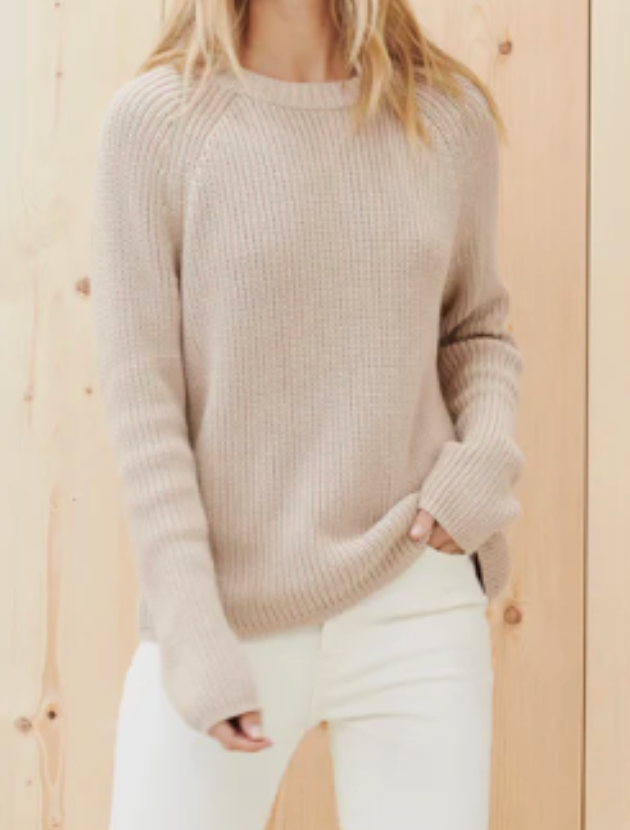
Jenni Kayne built its reputation on elevated essentials, and this sweater is a perfect example of why the brand has such a devoted following.
And her Cotton Fisherman Sweater is gorgeous. I love the weight, the relaxed fit, the beautifully textured fisherman knit, and the effortless way it drapes on the body. If my lifestyle called for it, I’d happily own one in every color.
Made from 100% cotton, the knit feels substantial without being bulky, giving it beautiful structure while remaining comfortable enough to wear across multiple seasons. It looks just as chic with denim as it does with linen trousers or draped over your shoulders on a cool summer evening.
One thing worth noting is that, despite its premium price, Jenni Kayne doesn’t specify the type of cotton used. Some brands in this price range highlight premium fibers like Pima or Peruvian Tanguis cotton, while Jenni Kayne simply lists the content as 100% cotton. That doesn’t mean the sweater isn’t beautifully made, but it does suggest you’re paying as much for the exceptional design, fit, craftsmanship, and overall aesthetic as you are for the raw materials. Something to keep in mind.
Spend: Alice Walk The Solid Fisherman Cotton Sweater
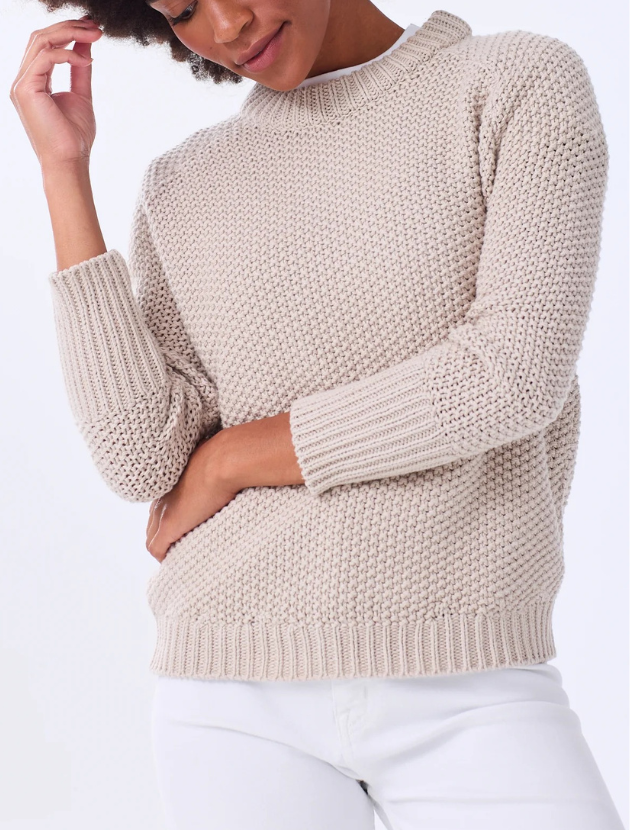
Alice Walk is a small brand I’ve been watching for a while, and their commitment to quality is evident in pieces like this.
Unlike the Jenni Kayne sweater, Alice Walk specifies that it’s knit from 100% Peruvian Tanguis cotton, a long-staple fiber known for its exceptional softness, durability, and ability to hold its shape over time. It’s the kind of detail I appreciate because it tells you exactly what you’re paying for.
The sweater itself is beautifully made, with a classic fisherman knit and a slightly more tailored silhouette than the Jenni Kayne. It feels polished enough to wear with trousers or layered over a crisp button-down, but it’s just as at home with your favorite jeans.
If I were deciding between the Jenni Kayne and the Alice Walk, I’d have a hard time. While I slightly prefer the more relaxed styling of the Jenni Kayne, I appreciate that Alice Walk is transparent about using a premium cotton fiber. At $100 less, it makes a compelling case for itself.
Save: Quince Organic Cotton Fisherman Crew Sweater
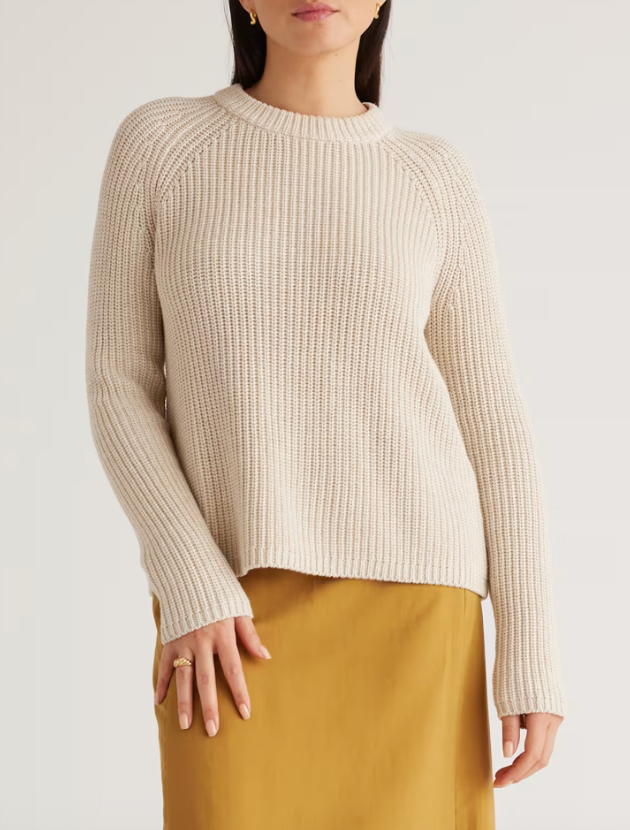
Quince continues to do what it does best: offer natural fibers at prices that seem almost too good to be true. Their direct-to-consumer model cuts out many of the traditional retail markups, allowing them to deliver impressive quality at a fraction of what comparable brands charge.
Made from 100% organic cotton, this sweater has the classic fisherman stitch, a relaxed fit, and all the timeless appeal of the more expensive versions.
The biggest difference comes down to the knit and finishing. It’s lighter in weight than both the Jenni Kayne and Alice Walk sweaters, and the overall construction isn’t quite as refined. If you had all three sitting next to each other, you’d notice those differences immediately. But worn on its own? Most people never would.
If you love the look of a classic fisherman sweater but don’t want to spend hundreds of dollars, this is an easy recommendation. It captures the essence of the style at an exceptional price, making it one of the best values in the category.
Shop here → Quince 100% Organic Cotton Fisherman Crew Sweater | $49.90 | Available in six colors, including Speckled Beige, in sizes XS–XL and Plus 1X–3X.
Is the Splurge Worth It?
This was a tough one.
The Jenni Kayne sweater is absolutely beautiful. In fact, it’s probably my favorite of the three. I love the weight, the relaxed fit, and the overall styling. It’s exactly what I picture when I think of the perfect cotton fisherman sweater.
But is it $300 beautiful? I’m honestly not sure.
Part of what gives me pause is that, despite the premium price, Jenni Kayne doesn’t specify the type of cotton used. Compare that to Alice Walk, which tells you exactly what you’re getting with its 100% Peruvian Tanguis cotton. I appreciate that level of transparency, and at $195, it makes a compelling case for itself. While I personally prefer the fit and feel of the Jenni Kayne, I’d have a hard time saying it’s worth an additional $100 for everyone.
Then there’s Quince.
I honestly don’t know how they do it. The fit is surprisingly similar to the Jenni Kayne, it’s made from 100% organic cotton, it’s available in plus sizes, and it costs less than $50. Is it as beautifully finished as the other two? No. If you compare them side by side, you’ll see the difference in the knit and overall construction. But once you’re wearing it, I think most people would be hard-pressed to notice.
And that’s really the point of this series.
It’s not about telling you which option is “best.” It’s about helping you understand what you’re paying for so you can decide what makes the most sense for your wardrobe, your budget, and your lifestyle. Sometimes the splurge is absolutely worth it. Other times, the save delivers almost everything you want. Most often, the right answer depends on you.
You Might Also Like


Want everything I recommend in one place?
Shop my trusted recommendations
ShopMy is where I save and organize the pieces I consistently recommend, including wardrobe staples, standout finds, and brands I have researched, worn, or genuinely trust. Everything here reflects my years of experience in personal style and the same thoughtful approach I use across The Well Dressed Life.
If you are looking for something specific, or want reliable options without the overwhelm, this is where I start.
Browse my ShopMy
Leave a Comment