

Clothing is more expensive than ever, and in many cases the quality is worse.
Prices have climbed fast. Fabrics feel lighter. Construction is inconsistent. Brands charge more and deliver less.
At the same time, most women in midlife are not operating with unlimited fashion budgets. Many of us are in one of the most expensive seasons of our lives, balancing family, career, aging parents, college tuition, and long-term financial goals. Clothing is competing with real priorities.
And no, in most cases you do not need to spend three hundred dollars on a sweater to look polished.
Style on a budget after 40 does not mean only shopping sales or refusing to spend money.
It means spending intentionally.
There is a difference between being frugal and being strategic.
The goal is not to buy the cheapest version of everything. The goal is to build a wardrobe that works hard enough that you do not have to keep replacing it.
After a decade as a personal stylist and years running The Well Dressed Life, I have stood in enough closets to know this: if we added up the money tied up in pieces that are rarely worn, never loved, or almost right, it would easily fund a smaller, more useful wardrobe.
1. Edit Your Closet Before You Buy Anything
A wardrobe on a budget starts with clarity.
Before you add anything new, look at what you already own.
When you feel like you have nothing to wear, the issue is rarely quantity. It is cohesion.
You may have:
- Pieces that no longer fit quite right
- Items purchased for a version of your life that has changed
- Clearance purchases that felt smart at the time
- Duplicates of something that almost worked
- Strong individual pieces that do not combine easily
Those decisions add up.
Before spending another dollar, create three piles:
- Keep and love
- Keep but needs tailoring
- Let go (donate, resell, recycle)
Pull out anything that does not fit your current body. Remove items you have not worn in two years. Let go of pieces that consistently feel almost right but never get chosen.
An edited closet makes real gaps visible.
For a step-by-step framework, read Closet Clean Out Tip That Actually Work and complete that process first.
Editing protects your budget because it prevents you from solving the wrong problem.
2. Make Sure You Have Your Core Essentials
After you edit your closet, the gaps become clear.
Before you fill them, one important reminder: your wardrobe essentials are unique to you.
They depend on how you live, where you go, what you wear most, and the level of polish your life requires. Your essentials may not look like mine. They may not look like someone else’s capsule wardrobe on Instagram.
They are simply the pieces your outfits rely on repeatedly.
Once you understand that, focus there first.
Do you have:
- A pair of jeans or trousers that fit well and hold their shape
- A jacket, blazer, or structured layer that pulls outfits together
- Reliable layering pieces that work under everything
- Shoes that balance the silhouettes you wear most
These are examples of items that create multiple outfits.
If your core pieces are weak, everything you add around them will feel slightly off. No statement top fixes stretched-out denim. No accessory corrects a jacket that does not fit.
Strengthen the foundation first.
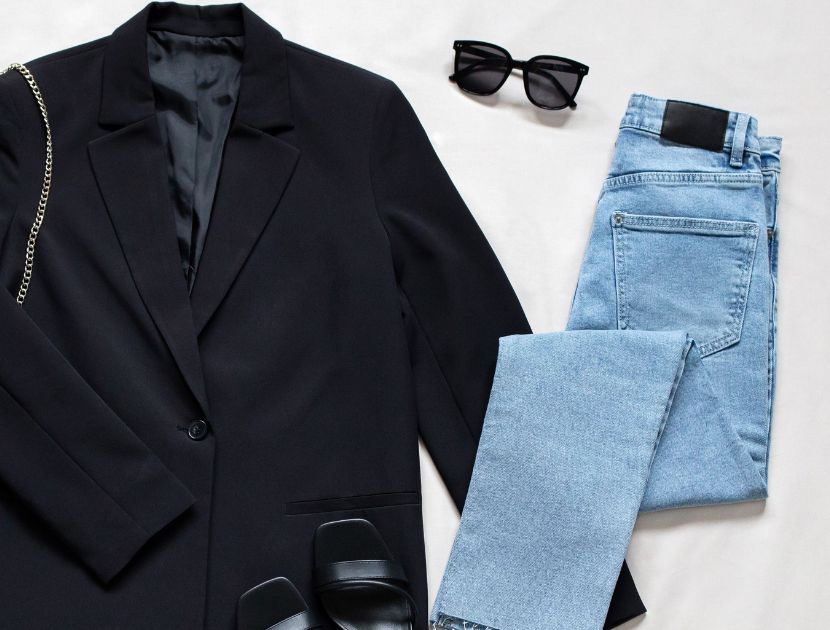
A well-fitting pair of denim, an updated trouser, or a clean structured layer can multiply what you already own. Fresh, simple layering pieces can extend older items without requiring a full overhaul.
If you are unsure what belongs in your core, review my Wardrobe Essentials Guide and compare it to how you actually dress.
Build the base before you add anything new.
When your essentials reflect your real life, your budget stretches further because each piece does more work.requiring additional purchases.
A strong foundation piece such as updated denim or a tailored blazer can reset multiple outfits.
For help identifying outdated shapes, read How to Tell If Your Clothes Are Out of Style.
Strategic replacement costs less than layering inexpensive fixes around a weak base.
Define Your Personal Style to Reduce Expensive Guessing
You can absolutely build a stylish wardrobe with affordable pieces. You just cannot build it randomly.
Guessing is what drains your budget.
When you are not clear on your personal style, everything looks like potential. You react to trends, promotions, and how something is styled in-store instead of asking whether it actually belongs in your life.
That is how closets fill up without improving.
Before you shop again, take inventory of what already works.
Pull five outfits you feel confident wearing. Lay them out. Look at them objectively.
What do they have in common?
- Color palette
- Level of structure
- Silhouette
- Simplicity or detail
Patterns matter.
If all five outfits rely on clean lines and minimal hardware, a ruffled blouse is not your next best purchase. If everything you love is neutral, a bright impulse buy will require additional pieces to support it.
Identify:
- The colors you repeat
- The shapes that flatter you
- The level of polish your real days require
When you can describe your style in a few clear sentences, shopping becomes more efficient. You filter faster. You stop buying things that need “fixing.” You reduce returns and regret.
If you need a structured framework, read How to Define Your Personal Style before your next purchase.
Clarity is one of the most effective budget strategies available.
4. Allocate Your Budget Based on Frequency
If you want to dress well on a budget after 40, stop evaluating pieces in isolation.
Look at your total seasonal or annual clothing allocation. Decide how you will divide it before you shop.
Spend more on categories you wear weekly:
- Quality denim
- Structured jackets
- Everyday shoes
- A versatile coat
Spend less on categories worn occasionally:
- Event dresses
- Trend driven items
- Statement pieces that rarely repeat
When I worked with private styling clients, many would begin by saying something like, “I would never spend more than $100 on jeans, so don’t show me anything above that.”
I always pushed back.
What if there were a pair for $150 that fit perfectly, held their shape for years, and eliminated the need to keep replacing cheaper pairs? Why set a rigid ceiling in the very category you wear three times a week?
Budgeting does not mean placing the same limit on every item. It means deciding where your money works hardest.
A two hundred dollar pair of jeans worn twice a week for two years delivers more value than three cheaper pairs that lose shape quickly. Meanwhile, a special occasion top worn twice a year does not need to be the most expensive piece in your closet.
If you need help thinking through where to invest and where to save, review Where to Splurge, Spend, and Save in Your Wardrobe and compare it to how you actually dress.
When you allocate based on frequency instead of emotion, your wardrobe improves without expanding.
5. Prioritize Fabric and Fit Over Labels
You do not need luxury logos to look polished. In fact, I would argrue you look more polished without them. You need good construction and correct fit.
Before purchasing, check:
- Fabric composition
- Weight and drape
- Seam quality
- Shoulder alignment
- Sleeve length
- Proper trouser break
If a piece fits almost perfectly, tailor it. Hemming trousers or shortening sleeves is typically far less expensive than replacing the garment entirely.
Fit determines how expensive something looks more than its label.
A $98 cotton sweater that holds its shape is a smarter buy than a $168 synthetic blend that pills after three wears.
6. Build a Controlled Color Palette
Random color purchases require more supporting pieces. That increases spending.
When your wardrobe operates inside a focused palette, combinations multiply naturally.
Navy, camel, cream, black, olive, gray. These tones connect easily.
Texture adds depth without expanding inventory. Denim, knitwear, suede, linen, leather.
If a new piece does not work with at least three items you already own, pause.
Cohesion reduces the need to buy more.
7. Have a Plan Before You Shop
Most unnecessary spending does not happen because something is wildly expensive.
It happens because you walk into a store or open a website without a clear objective.
You see something well styled. It looks current. The price feels reasonable. You imagine it working. So you buy it.
Then it hangs in your closet because it never solved a real problem.
Before you shop, decide exactly what you are looking for.
Not “I need something new.”
“I need a dark wash straight jean that works with my loafers and navy blazer.”
“I need a lightweight sweater that layers under my black jacket.”
When you define the item clearly, you shop differently. You move past distractions. You compare options. You focus on fit and fabric instead of impulse.
This is where sales become useful. A discount should lower the price of something you already planned to buy. It should not introduce a new category into your wardrobe.
If you cannot name at least two outfits you will wear it with in the next two weeks, it is not a gap. It is a distraction.
A plan protects your budget and your closet.hing you already planned to buy. It should not create a new purchase.
The Budget Mistakes I See Most Often
After years of working inside women’s closets, the problem is rarely that they do not spend enough. It is that they spend without a clear hierarchy.
These are the patterns that quietly cost the most money over time.
1. Replacing Instead of Upgrading
Buying a $60 version of the same jean three times is more expensive than buying one strong pair once.
The cycle usually looks like this.
The fit is close.
The fabric feels fine.
It works for now.
Then it stretches out. Or fades. Or never quite feels right.
So you replace it.
Upgrading one foundational piece often stops that cycle entirely. One excellent pair worn repeatedly is almost always more cost effective than multiple adequate ones.
2. Buying Around the Problem
When an outfit feels slightly off, many women try to fix it by adding something new.
A different top.
Another layer.
A statement necklace.
But if the issue is a weak foundation piece, layering around it only expands the closet.
If your jeans are losing shape, a new blouse will not fix that. If your jacket does not fit properly, another accessory will not solve it.
Buying around the problem is expensive. Addressing the problem directly is efficient.
3. Setting Arbitrary Price Rules
“I would never spend more than $100 on jeans.”
That rule sounds responsible. But it is not strategic.
Every category in your wardrobe does not deserve the same spending limit.
If you wear jeans three times a week, they deserve more allocation than a special occasion top worn twice a year.
Rigid ceilings often lead to repeated mid-level purchases instead of one strong one. Allocation is smarter than restriction.
4. Mistaking a Markdown for Value
We have all had that moment. You see a designer piece deeply marked down and your first thought is that it is a steal, even when it is not.
I have “scored” a designer blouse for $50 at T.J. Maxx and felt thrilled in the moment. Then I got it home and barely wore it because it made no sense in my closet.
A lower price does not automatically equal value.
Every piece, whether full price or marked down, has to meet the same standard. Does it work with what you own? Does it reflect your style? Will you actually wear it?
If the answer is no, it was not a deal. It was a distraction.
5. Buying in Categories You Already Have Enough Of
Most closets are heavy in one or two categories.
Too many tops.
Too many black pants.
Too many versions of the same safe piece.
Meanwhile, the items that actually pull outfits together are missing.
When you keep buying in the same comfortable category, your wardrobe expands without improving. The volume increases. The functionality does not.
Avoiding these patterns does not require a bigger budget.
It requires awareness.
When you strengthen foundations, allocate intentionally, and stop reacting to promotions, your wardrobe becomes more cohesive. And cohesive wardrobes are always less expensive to maintain.
Frequently Asked Questions
How can I look stylish on a tight budget after 40?
Focus on structure instead of volume. Edit your closet first. Strengthen foundational pieces such as denim and jackets. Build repeatable outfit formulas and avoid purchasing items that do not integrate with what you already own.
What pieces are worth investing in after 40?
Invest in items worn weekly. Quality denim, a structured blazer, leather shoes, and a versatile coat typically deliver the highest cost per wear value.
How many clothes does a woman over 40 really need?
You need enough pieces to create two to three weeks of functional combinations for your real life. Beyond that, additional items often increase complexity rather than value.
Is affordable fashion for women over 40 possible without sacrificing quality?
Yes. Focus on fabric, fit, and cohesion rather than trend volume. Shop selectively and tailor strategically to elevate mid-priced pieces
Related Reading: How to Care for Your Knitwear So Sweaters Last Longer | The Best Garment Steamer for Under $100
Related Reading: How to Shop Like a Stylist | How to Look Stylish Every Day | STILL The BEST Purse Organizer for Your Totes
Related Reading: STILL The BEST Purse Organizer for Your Totes
You Might Also Like





Want everything I recommend in one place?
Shop my trusted recommendations
ShopMy is where I save and organize the pieces I consistently recommend, including wardrobe staples, standout finds, and brands I have researched, worn, or genuinely trust. Everything here reflects my years of experience in personal style and the same thoughtful approach I use across The Well Dressed Life.
If you are looking for something specific, or want reliable options without the overwhelm, this is where I start.
Browse my ShopMy

Leave a Comment